Traveling in Vietnam With Kids: How to Plan the Distance, Weather, and Pace
Practical advice for visiting Vietnam with kids, including routes, regional weather, flights, hotels, food, traffic, beaches, and family pacing.
By JeremyJeremy and Jason run Splash of Color Travel together.
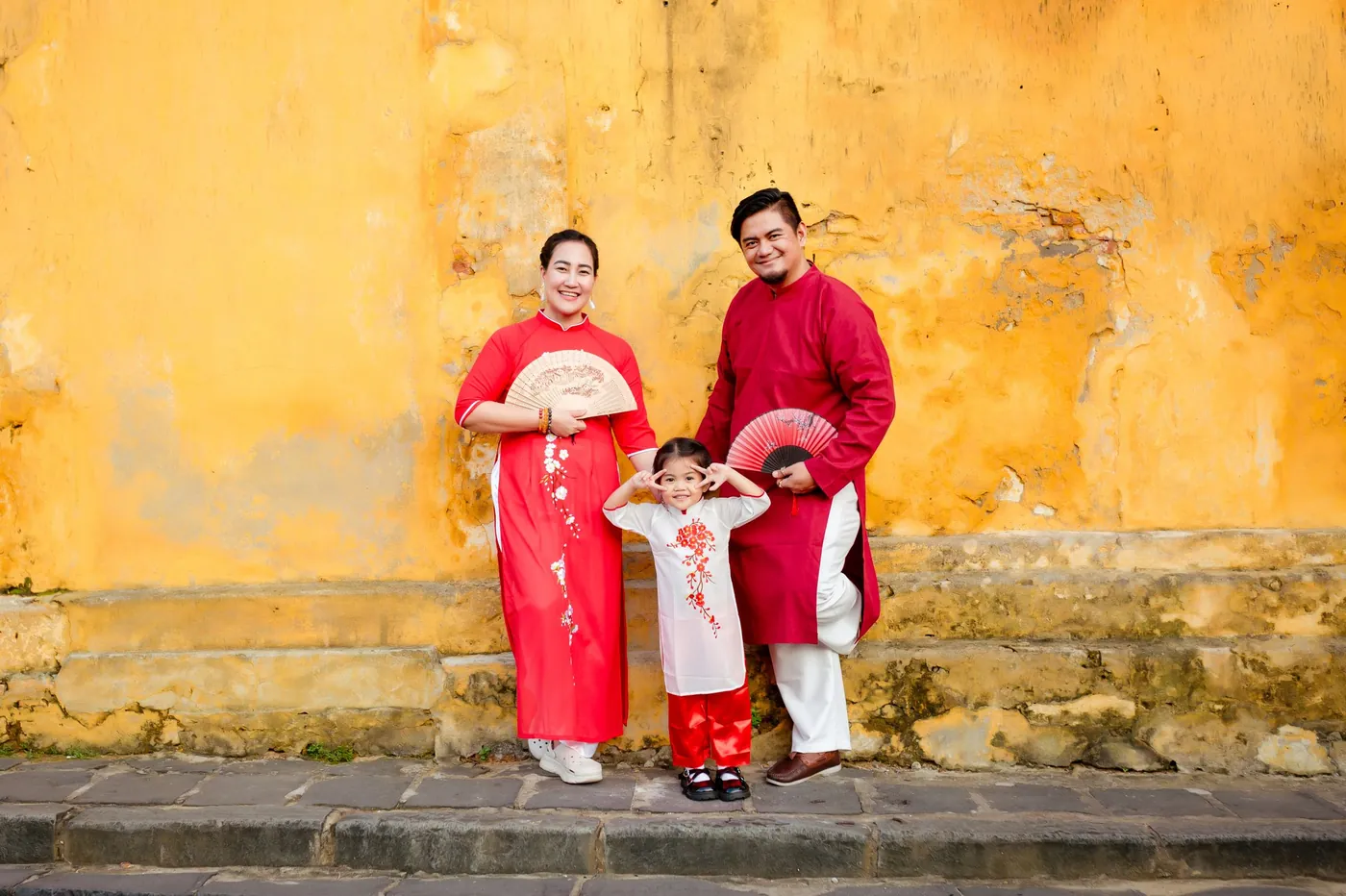
Vietnam gives families cities, beaches, mountains, food, and history in one country. It also stretches more than a thousand miles from north to south. That shape matters.
Hanoi, Hoi An, and Ho Chi Minh City are not neighboring stops connected by a quick train. Each region has its own weather, pace, food, and airport routine. A family that tries to see the entire country in ten days can spend too much of the trip checking out, flying, and finding the next hotel.
The better version covers less ground. Choose the regions that fit your dates and your children's interests. Use private transportation where traffic or distance makes the day fragile. Leave enough time for the meal, pool break, lantern shop, or train ride that nobody could have predicted would become the family favorite.
Pick two regions before you pick ten cities
Think of Vietnam in three broad sections:
- Northern Vietnam for Hanoi, Ninh Binh, Ha Long Bay, Sapa, and the mountain regions
- Central Vietnam for Hue, Da Nang, Hoi An, beaches, and nearby countryside
- Southern Vietnam for Ho Chi Minh City, the Mekong Delta, and Phu Quoc
Ten days works well for two regions. Two weeks can hold all three if the family is comfortable with domestic flights and you resist adding a new hotel every other night. With young children, grandparents, or a strong beach priority, two regions may still be the richer trip.
A first family route might be four nights in Hanoi, four or five nights in Da Nang or Hoi An, and three or four nights in Ho Chi Minh City. Another family might skip the south and use those nights for Ninh Binh and a slower central coast stay. Neither route is incomplete. It is planned around a different family.
Do not let a long list of famous places decide the trip. Decide what the family wants more of: city energy, food, beaches, history, countryside, or mountain scenery. The route gets easier once that choice is honest.
Vietnam does not have one weather season
The north, center, and south do not share one neat dry season. Hanoi can be cool while Ho Chi Minh City is hot. The central coast can have heavy rain while another part of the country has clear skies.
This is one of the most important differences between planning Vietnam and planning a compact destination. Start with the actual month and the exact places. Do not rely on a chart labeled only "Vietnam weather."
Central Vietnam needs particular attention during the later part of the year because storms and heavy rain can affect Hue, Da Nang, and Hoi An. Northern mountain weather can be cold, foggy, or wet when families expect tropical heat. The south stays warm, but rainfall still changes the shape of outdoor days.
Weather should guide the route before anyone becomes attached to a hotel. It should also guide how much of each day is reserved. A family can enjoy a rainy afternoon in Hanoi or Hoi An. A plan that depends on a boat, beach, or mountain view every day is more fragile.
Count domestic flights as travel days
Flying is usually the practical way to move between Vietnam's major regions. The flight itself may be short. The move is not.
Families still need to check out, drive to the airport, arrive early enough for the flight, collect bags, and reach the next hotel through city traffic. Treat that move as the day's anchor. Add one easy dinner or swim afterward, not a prepaid tour.
Vietnam has overnight trains and long-distance rail routes, but they are not automatically the more comfortable family choice. A private cabin can be memorable for children who sleep well on trains. It can also mean a poor night, an early arrival, and a tired first day in the next city. Choose it because the train is part of the experience, not because it looks like free transportation and a free hotel night.
The train is fine. Skip the overnight sleeper buses. They are cramped, the berths are not built for adult bodies, and you have no control over the driving on a long night route.
Travel mountain roads in daylight only, and in a smaller van rather than a full-size coach. Smaller vehicles handle the switchbacks better, the ride makes fewer people carsick, and a driver can pull over when a child needs a break. A night descent on a mountain road is the one part of a Vietnam itinerary we would always rearrange.
Private airport transfers are worth arranging when the family has several bags, arrives late, or needs a child seat. Confirm the vehicle size and seat request in advance. Do not assume the right restraint will be available in an airport taxi.
Start with Hanoi in small circles
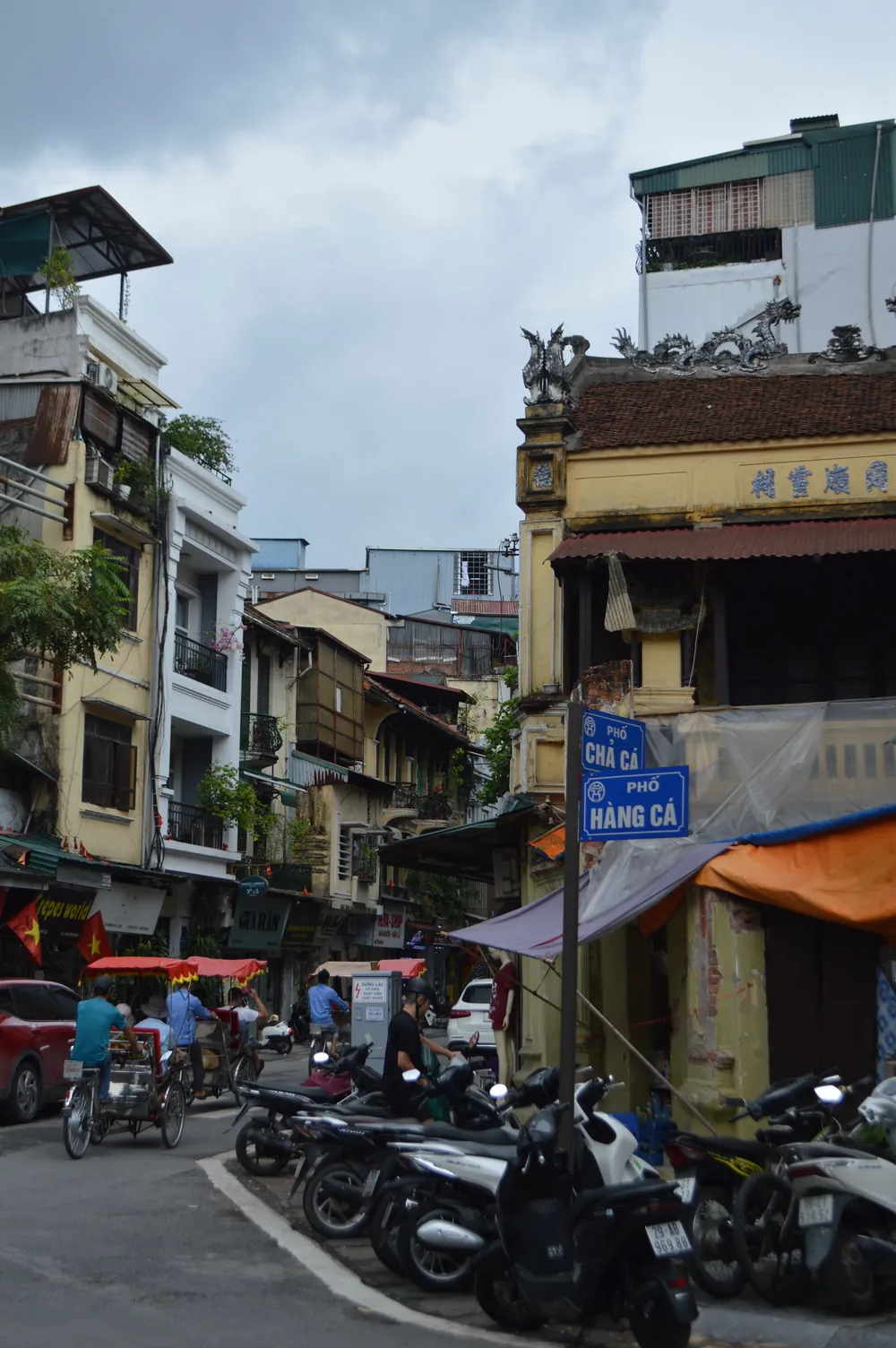
Hanoi rewards slow attention. The sound of scooters, smell of grills, small temples, lake walks, cafés, and street life are part of the place. Families miss that when they cross the city all day chasing a checklist.
Build each day in a compact area:
- Hoan Kiem Lake and the Old Quarter for a first walk, food, and an early evening
- The Temple of Literature and nearby museums for a history-focused half day
- The French Quarter for broad streets, architecture, and a calmer walk
- West Lake for more space, lakeside cafés, and a break from the Old Quarter's intensity
The Old Quarter is fascinating, but sidewalks may be crowded with parked scooters, stools, cooking, and shop displays. A stroller will not always have a clear path. A compact stroller and baby carrier give parents more options.
Do not make a newly arrived family cross Hanoi traffic repeatedly on the first day. Keep the arrival plan close to the hotel. Jet lag and street noise are enough stimulation.
Help children understand the traffic before they cross it
Traffic is one of the biggest adjustments for first-time families. Scooters can approach from directions a child does not expect, and a painted crossing does not always create the pause an American family anticipates.
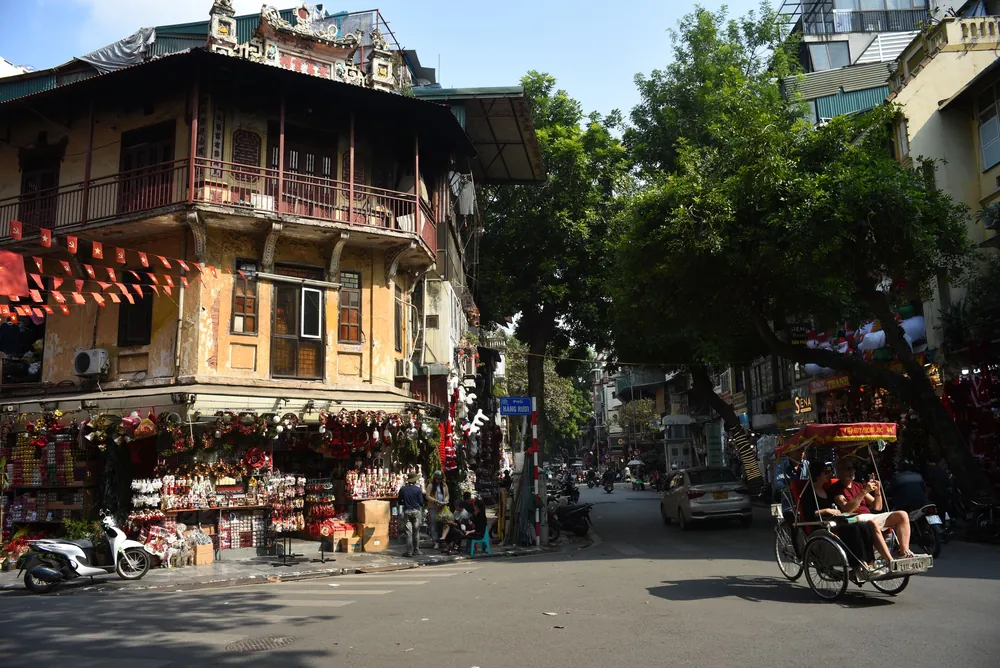
Use signal-controlled crossings when available. Hold younger children's hands. Let a local guide or hotel staff help with the first difficult crossing. Do not send a child ahead or ask them to copy another pedestrian alone.
For longer city trips, use a reputable taxi, ride service, or arranged driver. Keep phones and cameras away from the traffic side of the sidewalk because passing riders can grab unsecured items.
Motorbikes are not the family shortcut. Vietnam's scooter culture is part of what makes the streets vivid, but children are safer and more comfortable in a properly arranged vehicle. For mountain routes, use an experienced driver and a vehicle suited to the road.
Pair Da Nang and Hoi An without creating extra work
Da Nang and Hoi An are close enough to share day trips. That does not mean every family needs to change hotels between them.
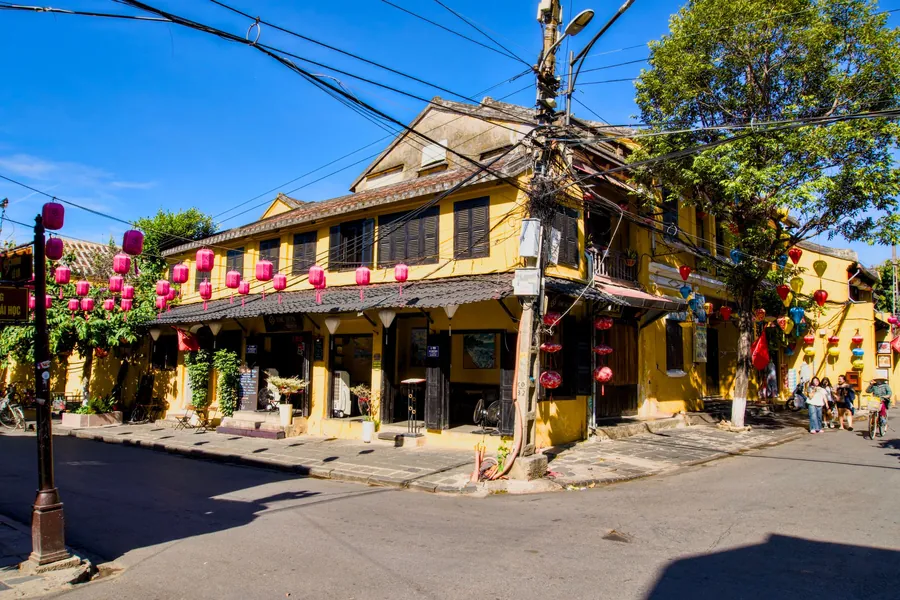
Stay in Da Nang when the airport, a broad city beach, modern hotels, and simple transportation matter most. Stay in Hoi An when evenings in the Ancient Town, food, crafts, and countryside are the center of the trip. An Bang Beach gives Hoi An families a coast day without turning the trip into a separate island stay.
The right base depends on which part of the day you want to make easy:
- Da Nang makes airport days, resort facilities, and city-beach time easier
- Hoi An makes lantern-lit evenings, short old-town walks, and countryside activities easier
- A split stay gives you both hotel experiences but adds another round of packing and checkout
Our family beach guide to Thailand, Vietnam, and Japan compares Da Nang, Hoi An, and Phu Quoc in more detail.
In Central Vietnam, leave room for weather changes. A cooking class, craft workshop, food tour, or slow café afternoon can replace a beach or bicycle plan without making the day feel second best.
Decide whether Ho Chi Minh City supports the route
Ho Chi Minh City is not just Hanoi with warmer weather. Its street rhythm, history, food, and city layout create a different stop.
The city works well for families who want museums, markets, cafés, modern shopping centers, and access to the Mekong Delta. It is less useful when it appears only because the international flight leaves from there.
If the family has two nights, choose a central hotel and keep the plan compact. If you want a Mekong outing, add enough time that it does not become a long drive immediately before another flight.
Plan city days by district or neighborhood. Group the major historical stops, then build in an indoor or pool break. Use a car between areas when heat, traffic, or tired legs make walking unpleasant.
For a family ending on Phu Quoc, the city can be a good contrast before several resort days. It should not consume half the beach stay through a late arrival and early departure.
Treat cruises and remote stays as their own logistics
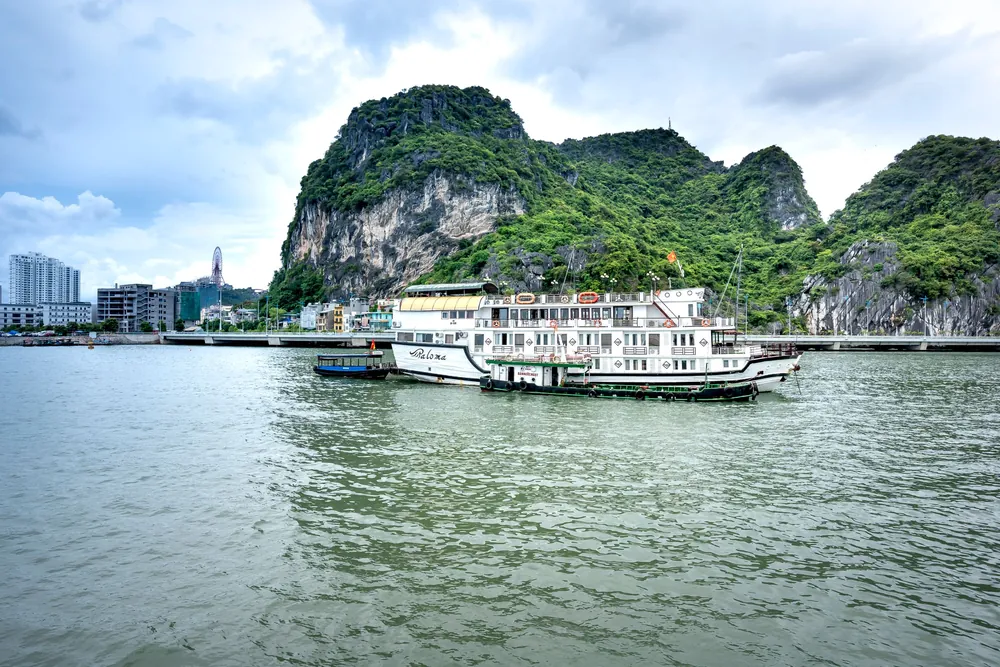
An overnight cruise in Ha Long Bay or Lan Ha Bay can be a memorable family experience. The scenery does not remove the need to inspect the practical details.
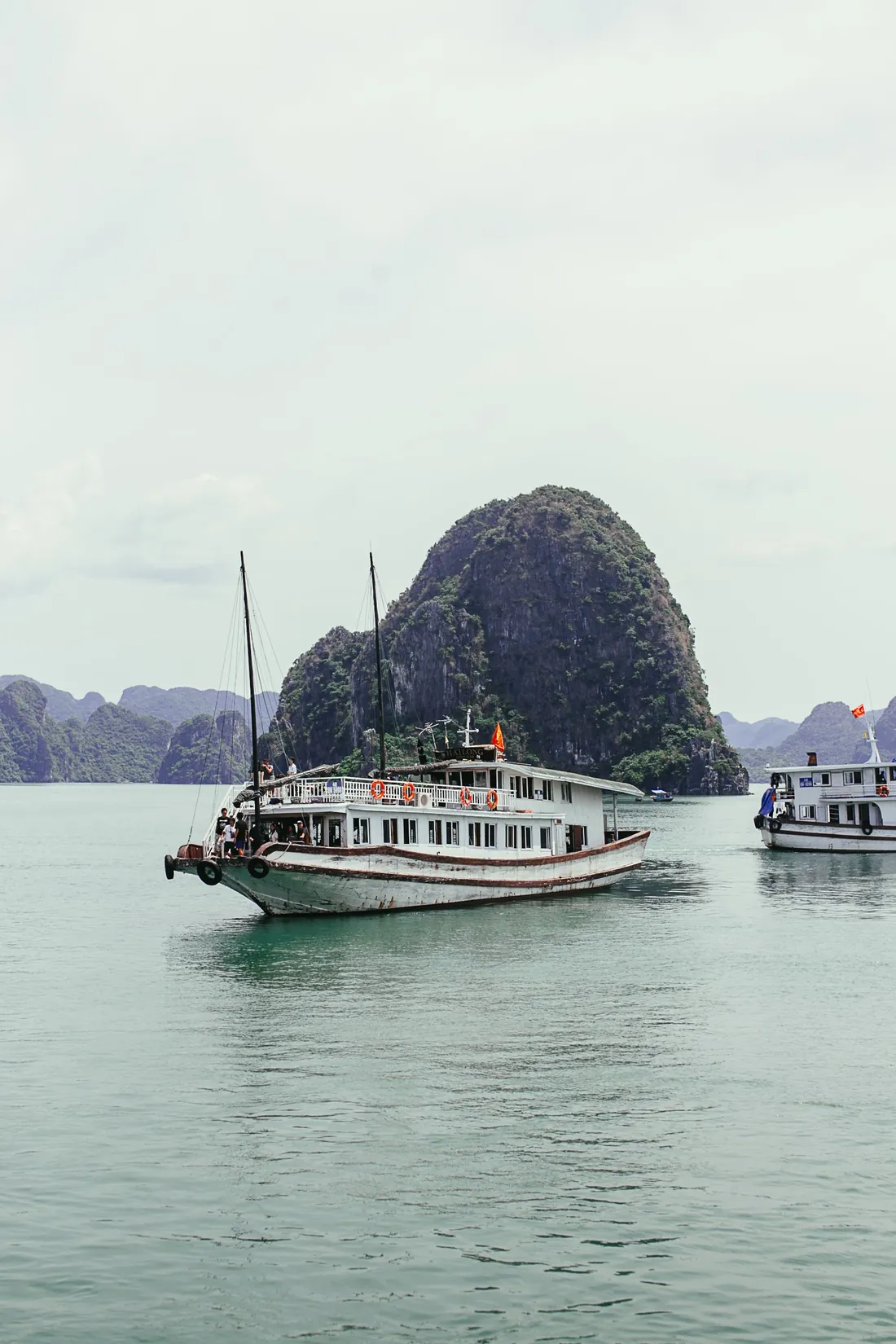
Before booking, ask about:
- The drive time from Hanoi and the exact pickup plan
- Cabin occupancy and whether a child shares a bed
- Railings, balconies, stairs, and supervision around open decks
- Child-size life jackets and the rules for kayaking or small boats
- Meal flexibility and allergy handling
- What happens when weather changes the sailing
- Medical access and communication while on the water
The same principle applies to mountain lodges and remote homestays. A beautiful setting may come with steep steps, long drives, limited climate control, or a basic bathroom. That can be part of the appeal for one family and a poor surprise for another.
Comfort is not about removing every rough edge. It is about knowing which ones your family is choosing.
Keep Ha Giang for the right family and the right vehicle
Ha Giang's mountain roads are extraordinary. They are also long, winding, and remote. The popular motorbike version is not the default family experience.
Ha Giang is perfect for teenagers, and for genuinely adventurous younger children. It is not the right call for a family that wants an easy week. Plan it with an experienced private driver and enough days that the route is not rushed. Confirm motion-sickness plans, bathroom stops, road conditions, lodging standards, and how much driving each day requires.
We have ridden those roads ourselves. That firsthand experience is why we would not flatten Ha Giang into a quick add-on or treat a motorbike as the only way to see it. Families can get the scenery and regional knowledge without putting children on bikes.
For a less intense trip, Ninh Binh is the easier northern landscape add. The distance decides it: Ninh Binh is roughly an hour and a half from Hanoi, while Ha Giang is around six. One is a comfortable day trip or an overnight. The other is a serious commitment of driving at both ends. Ninh Binh still gives you river scenery, limestone formations, and countryside, which is most of what families picture when they imagine northern Vietnam.
Check the hotel, not just the room category
Vietnam offers strong value in family rooms, connecting rooms, beach resorts, and villas. The building and location still decide how comfortable the stay feels.

Before booking, confirm:
- The legal occupancy and exact bed setup
- Whether connecting rooms are guaranteed
- Crib or rollaway availability
- Elevator access in smaller hotels
- Balcony and pool barriers
- Street noise and construction near the room
- Breakfast hours and children's pricing
- Laundry service or self-service machines
- The distance from the room to the pool, restaurant, or beach
A charming Old Quarter hotel may have narrow stairs and small rooms. A Hoi An property may look close to the Ancient Town but sit across a busy road. A beach resort can be excellent and still leave the family dependent on a car for every dinner.
For longer trips, laundry matters more than another suitcase. Pack for about a week and wash once. The lighter bags make domestic flights, hotel changes, and small elevators much easier.
Give each person a reason to like the day
Vietnam works especially well when the family shares experiences instead of separating every day into adult sights and child entertainment.
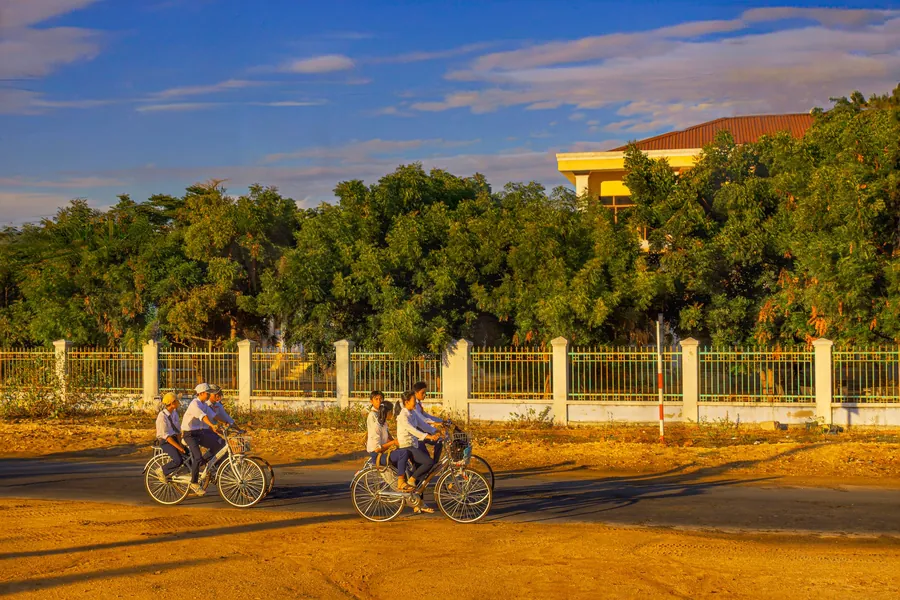
Good shared anchors include:
- A short food tour with tastes chosen for the children's comfort level
- A lantern or craft workshop in Hoi An
- A cooking class with a clear minimum age and hands-on format
- A boat ride in Ninh Binh with shade and a realistic duration
- A market visit where each child chooses one fruit or snack to share
- A beach morning followed by a slower cultural stop
- A train segment chosen for the experience, not just transportation
Museums and historic sites land better when children know the story they are entering. Explain one person, object, or question before the visit. A short focused stop usually teaches more than a long march through every room.
Keep one part of the day open. Vietnam is full of moments that were not in the itinerary: a bakery that smells too good to pass, a tiny train crossing, or an evening game beside a lake.
Use food as an easy way into the country
Vietnamese meals can be very approachable for children. Many dishes let the family control herbs, sauces, and spice at the table.
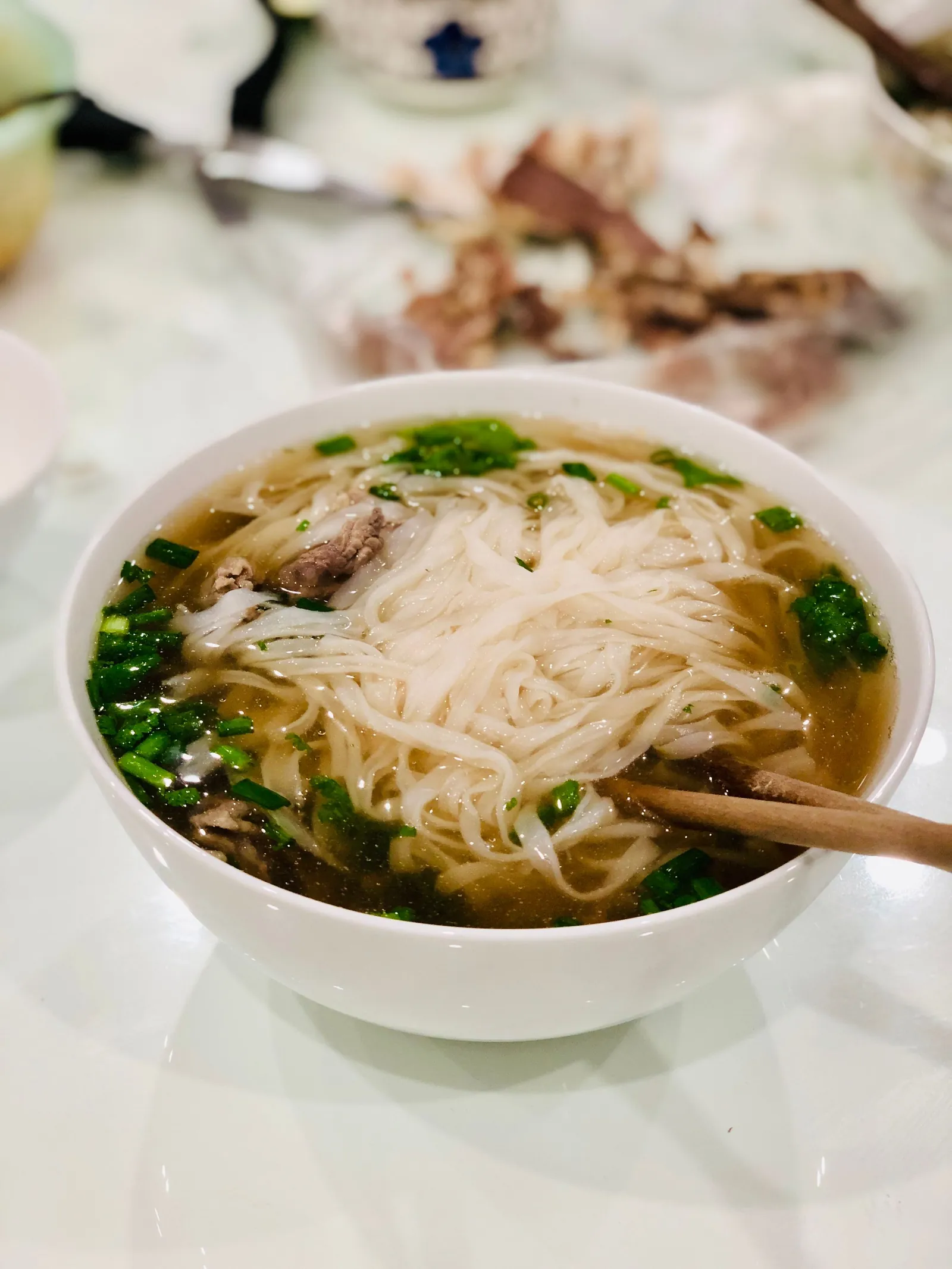
Good starting points include:
- Pho with herbs and chili added separately
- Banh mi with a simple filling
- Com tam, broken rice with grilled meat or egg
- Bun cha, grilled pork with noodles and herbs
- Fresh spring rolls with sauce on the side
- Fried rice, grilled chicken, and fruit
- Cao lau in Hoi An for a regional noodle dish
Order several things and share. A child does not need to commit to a whole unfamiliar bowl to discover they like something.
For vegetarian families, learn one word: chay. It means vegetarian, and a sign reading com chay or pho chay marks food you can eat. Vietnam has a large Buddhist population, so vegetarian and vegan cooking is ordinary here rather than a special request. It is far easier to eat well without meat in Vietnam than most families expect, and entirely vegetarian restaurants are common in the cities.
Street food is part of Vietnam, but it should not become a dare. Choose busy vendors preparing food fresh, look at how ingredients are stored, and follow your own comfort level. The practical test we use: eat where the stall has running water. A vendor who can actually wash hands, dishes, and produce is a different proposition from one working out of a single standing bucket. It is easy to check in a few seconds and it rules out most of the risk. A good restaurant meal is no less authentic because the family sits down in air conditioning.
Do not send everyone across the city for a famous bowl unless the meal matters that much. The best food plan follows the day's route.
Prepare carefully for food allergies
Fish sauce, shrimp paste, peanuts, soy, wheat, sesame, egg, and shellfish can appear in broths, marinades, dipping sauces, and garnishes. Removing something from the top may not remove what was used during cooking.
Carry an allergy card written in Vietnamese that names the exact ingredient and explains whether cross-contact is dangerous. Show it before ordering.
Small kitchens may use the same stock, oil, pan, or preparation surface for many dishes. A restaurant may understand the request and still be unable to prepare a safe meal. Accept that answer and use the backup plan.
Keep safe snacks with you. Consider an apartment-style room for part of the trip when an allergy is severe or a child eats a narrow range of foods. Ask hotels to confirm important meals before arrival instead of trying to solve everything at the table.
Pack for heat, rain, and uneven walking
Light, quick-drying clothing works for much of the country, but the north can be cool in winter and mountain areas can feel colder than families expect. Pack for the route, not the word "tropical."
Bring comfortable shoes for uneven sidewalks, wet stone, and long airport corridors. A compact stroller works better than a large one in crowded streets and small restaurants. A baby carrier helps in old buildings, markets, steps, and places where the sidewalk disappears.
Keep a day bag with water, sunscreen, mosquito repellent, tissues, hand sanitizer, a small rain layer, a change of clothes for younger children, and any medication that cannot be replaced easily.
During hot months, start outdoor days early and use the afternoon for a pool, lunch, museum, or rest. During wet periods, do not reserve every hour. A flexible day can move around a downpour without feeling ruined.
Handle health, insurance, and documents early
Ask a clinician or travel clinic about current recommendations for the exact regions and activities on the itinerary. Mosquito protection matters, and medical access changes outside major cities. Travel insurance should cover the family's planned activities and the medical care or evacuation you would want available.
Bring a full supply of prescription medicine in original packaging. Carry a physician's letter for important conditions, allergies, and medications.
Treat Vietnam's medication rules as strictly as Japan's. Some common prescription and over-the-counter drugs are controlled, quantities are limited, and the rules turn on the active ingredient rather than the brand name. Check every medication by ingredient well before departure, keep it in the original labeled packaging, and carry the prescription or a physician's letter. If you cannot confirm a specific medicine is allowed, ask us or the embassy before you fly rather than finding out at the airport.
Every traveler, including each child, needs the correct passport and entry permission for the dates of the trip. Visa rules can change. Use Vietnam's official immigration and e-visa channels, not a look-alike application website, and check the approval details against each passport before flying.
Vietnam's ambulance number is 115. Save the nearest appropriate medical facility for each major stop and keep the hotel's address written in Vietnamese. In a remote area, contact the guide or hotel first when they can coordinate faster local help.
Follow the room you are in
Vietnamese people love children, and that affection is often physical in a way that surprises American families. Strangers may touch, hold, hug, or kiss a baby or toddler, pinch cheeks, or ask to take a photo. It is warmth, not a violation, and it is completely normal here. Decide in advance how your family wants to handle it. A polite smile and a gentle redirection is understood, and nobody will take offense. It helps to prepare young children for it rather than letting the first encounter startle them.
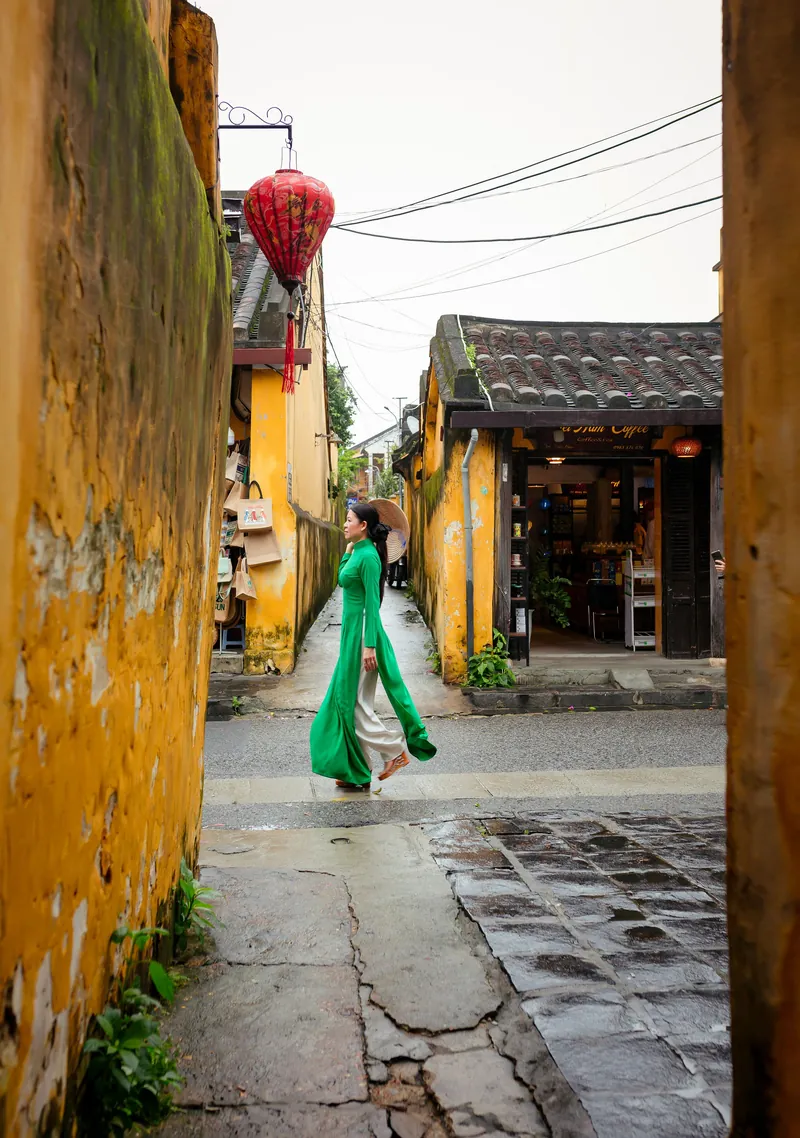
That welcome does not mean every café, pagoda, or memorial is a play space.
Keep voices low in religious and memorial sites. Dress with covered shoulders and knees when visiting important pagodas or temples. Remove shoes when signs or local behavior indicate it. Ask before taking close photographs of people, especially children.
In markets, keep the family close without blocking narrow paths. Bargaining may be normal in some settings, but it should stay friendly. Let children watch how adults greet, wait, and make space before they jump into the interaction.
The goal is not a long list of rules. It is helping children notice that each place has its own rhythm.
The best Vietnam family trip leaves something for next time
Vietnam is too varied to finish in one vacation. That is good news.
A family can spend ten days between Hanoi and Central Vietnam and still have beaches, mountain roads, the Mekong Delta, and Ho Chi Minh City waiting for another trip. Leaving those places out is not failure. It is what lets the places you chose feel real.
Fewer hotel changes, realistic flight days, a driver on the difficult roads, and one open part of each day make Vietnam easier. They also make the trip more memorable. The family spends less time managing the country and more time being in it.
FAQ
Is Vietnam a good destination for children?
Yes. Vietnam offers welcoming hotels, beaches, food that children can approach gradually, domestic flights, private guides, and a wide range of cultural and outdoor activities. The main planning challenges are distance, traffic, regional weather, and the number of hotel changes.
How many days does a family need in Vietnam?
Ten days works well for two regions. Fourteen days can include north, center, and south if the family is comfortable with domestic flights and a steady pace. With younger children or a beach priority, two regions often feel better even with two weeks.
Should families travel Vietnam by train or fly?
Flights are usually the practical choice between major regions. A train can be worth adding when the ride itself appeals to the children and the schedule fits the route. Do not assume an overnight train guarantees a good night's sleep or saves a full travel day.
Vietnam with kids becomes much easier once the route stops trying to cover the whole country. Book a free call and tell us your dates, your children's ages, and what everyone wants from the trip. We will help you choose the right regions, comfortable hotels, and a pace the family can actually enjoy.
Planning Vietnam for your group or family?
Tell us who's coming and roughly when. On a free 30-minute call we talk through the route, the pace, and where to stay, and your first itinerary draft arrives within 5 business days. Founding clients: no planning fee for our first 10 clients, in exchange for honest feedback after your trip. Our guarantee: if the first itinerary draft doesn't fit your family, two rounds of revisions are included to get it right. If it still isn't right, you can walk away at no cost.
Book a free planning callNot ready for a call? Get the free guide.
Get our free northern Thailand luxury guide: our favorite stays up north, the call-outs worth booking, and how we'd pace a comfortable trip. Plus our newsletter every couple weeks: the stays and activities we'd book for you.
More on Vietnam
- The Ha Giang Loop With Kids: Is It Doable, and How We Would Do ItPlanning Decision
- Hoi An or Da Nang With Kids? Stay in One, Visit the OtherPlanning Decision
- 10 Days in Vietnam With Kids: Pick Two Regions, Not FivePlanning Decision