A day in Osaka
Their day 9 of 10. Yours starts from who is going.
This day stays in Nipponbashi and the streets around it in central Osaka, and it is built around an afternoon of bunraku, the puppet theater that comes from this city. The morning is a tuna stall at Kuromon market, and the evening is dinner at a chef's counter in a stone alley by Hozenji temple.
Morning
Kuromon market is a covered street of about 150 stalls in Nipponbashi where Osaka cooks do their shopping, five minutes from the hotel by subway. Early on the buyers are mostly locals, and tour groups fill the aisles from late morning. The stall to come for is Maguroya Kurogin, where a cutter breaks down a whole bluefin tuna at the counter. He runs a long knife along the backbone, lifts away big blocks of dark red meat, and slices them while you watch. You eat the slices standing at the counter, a few feet from the rest of the fish on his board.
Afternoon
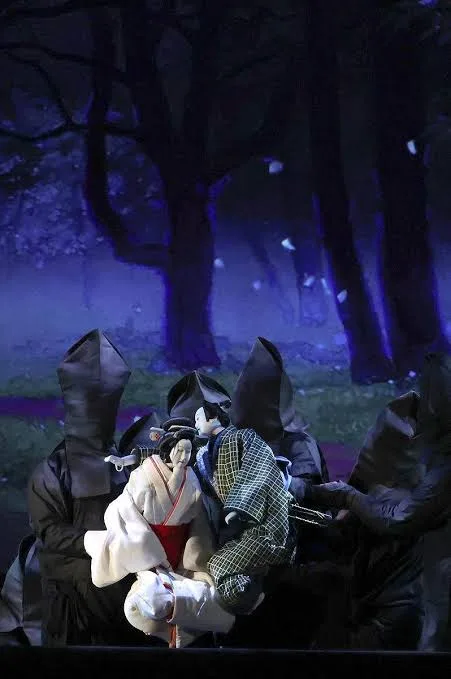
Lunch is kitsune udon, noodles under a slab of sweet fried tofu, at Usami-tei Matsubaya, where it was first made. At the National Bunraku Theatre, puppets nearly the size of a person are each worked in plain view by three puppeteers, in the puppet theater Osaka invented. The lead works the head and right arm with his face uncovered, and two assistants hooded in black take the left arm and feet. Before a scene a wall panel at stage right turns and brings the narrator and the shamisen player, whose lute has three strings, around already kneeling. The narrator bows to his script, then voices every character himself. The movements look comical at first, and it is strange how much you end up caring about a doll three men are holding up.
Evening
Naniwa Kappo Kigawa is the counter other Osaka chefs measure themselves against, and the place where one sea bream comes back to you as four dishes. It sits in Hozenji Yokocho, a narrow stone alley next to Hozenji temple, and kappo is the Osaka habit of eating at a counter while the cooks work in front of you. Before opening, a server sprinkles water over the alley stones. The cooking all happens on the ground floor, around a counter that bends in an L. Chef Osamu Ueno fillets fish with a long knife at the head of it, and each cook holds one station and barely talks. Fish goes over hard white charcoal, and he holds that the first ten seconds on the fire decide it. The bream arrives as raw slices first and, near the end, as its fried scales and simmered head.
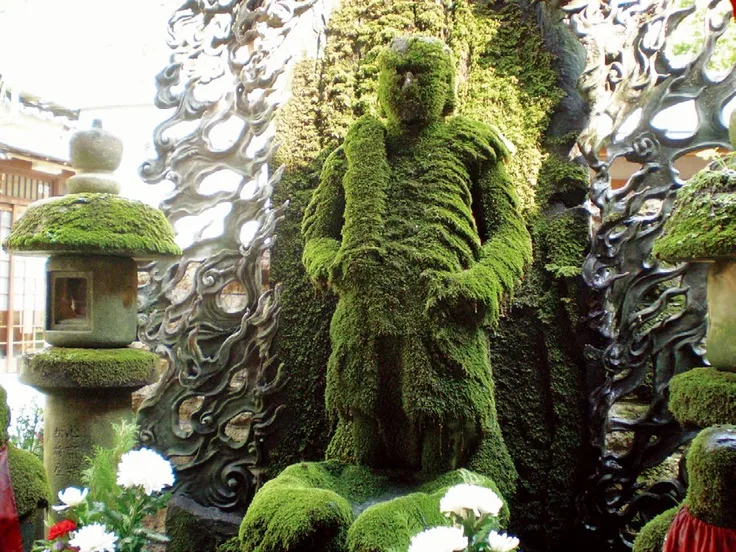
A few steps from Kigawa's door stands the Mizukake Fudo, the water-splashed Fudo, a statue of a fierce Buddhist guardian that was the only thing left when the temple burned in the 1945 air raids. People have poured water over him ever since, and he is covered head to foot in thick green moss. You rinse your hands at the well, take a ladle, and add yours.