A day in Kyoto
Their day 7 of 10. Yours starts from who is going.
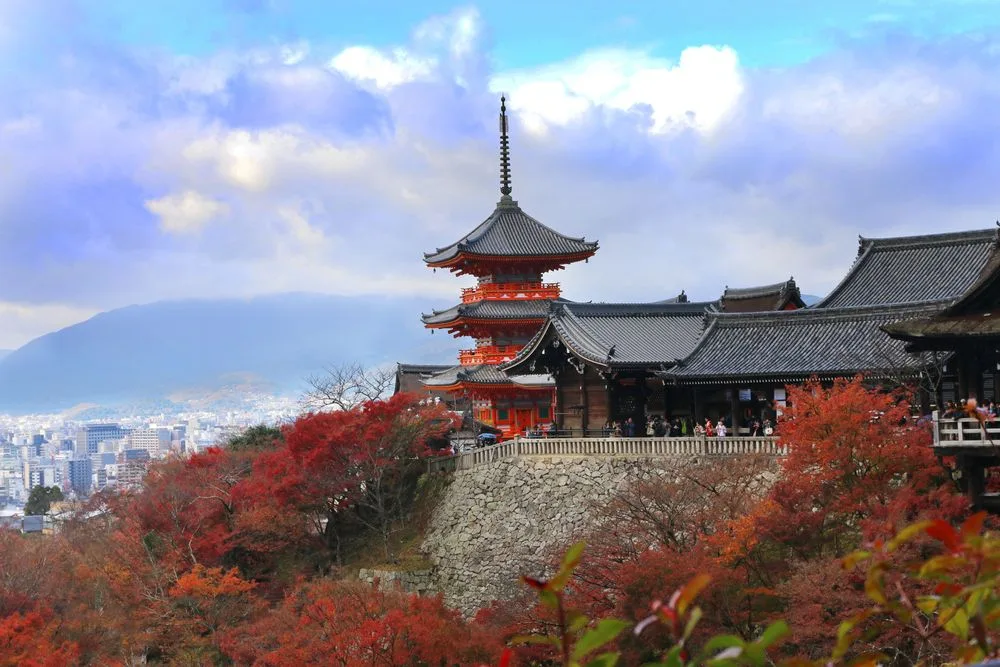
This day stays mostly in Higashiyama, with one drive out to northwest Kyoto for Zen meditation at Shunko-in. It runs from Kiyomizu-dera at dawn to dinner at Mizai, which the whole day is built around.
Dawn
Kiyomizu-dera is Kyoto's best known temple, five minutes up the hill on foot from the hotel, and the reason to come at dawn is its huge wooden veranda. It hangs out over the slope on tall pillars, and this early you get most of an hour on it nearly alone before the tour buses fill the hill. In mid November the maples below the veranda have turned red, and from the railing you look down onto the tops of the trees. Inside the halls, take your shoes off, since people kneel on those floors to pray.
Morning
Shunko-in is a Zen temple inside the Myoshin-ji complex in northwest Kyoto, about half an hour by car, and it is normally closed to visitors. The reason to make the drive is the abbot, Rev. Takafumi Kawakami, who studied in America and teaches meditation in fluent English to one private group a day. He asks you to call him Taka. After a short talk you sit zazen (seated Zen meditation) with him, and he teaches that a wandering mind is normal and nothing you have to empty out. Then comes a walk through the main hall and the dry garden, and a bell made in the sixteenth century for a Jesuit church, which the temple kept hidden through the years Christianity was banned. The visit runs about two hours and finishes with green tea and more conversation with Taka.
Lunch
Ichiwa is a tiny shop at the east gate of Imamiya Shrine, about fifteen minutes from Shunko-in, and it sells exactly one thing, small skewers of rice cake grilled over charcoal and coated in sweet white miso (fermented soybean paste). The family says it has sold only this for about a thousand years, and a rival selling the same skewers has stood directly across the lane for nearly four hundred. You sit on tatami (woven straw mats) over a small courtyard garden, and the skewers come straight off the charcoal by the plateful. On this lane, four hundred years still makes you the new shop.
Afternoon
Sanjusangen-do is back across town in Higashiyama, a temple hall about 120 meters long, and it holds something you will not find anywhere else. Inside, 1,001 wooden statues of Kannon (the Buddhist goddess of mercy) stand in ranks down the whole length of the hall, and most of them are seven to eight hundred years old. You walk from one end to the other beside them, with statues of the Wind God and the Thunder God guarding the two ends. Photos are not allowed inside the hall. The standing figures look identical from a distance, and up close each face is a little different.
Evening
Mizai is a kaiseki restaurant (a long dinner of many small seasonal courses) at the edge of Maruyama Park, one counter of about fourteen seats and one of the hardest tables in Kyoto to get. Staff lead you down stone steps to a plain pavilion marked by one lantern, and everyone goes in together. Chef Hitoshi Ishihara explains each course from the end of the counter. A bowl of broth made with the crisp rice from the bottom of the pot comes down the counter, and you pour it over your own rice. Leave rings at the hotel because they scratch the lacquer, and skip photos of the food because he wants your full attention. He whisks every bowl of matcha (powdered green tea) himself and picks a tea bowl for each guest.
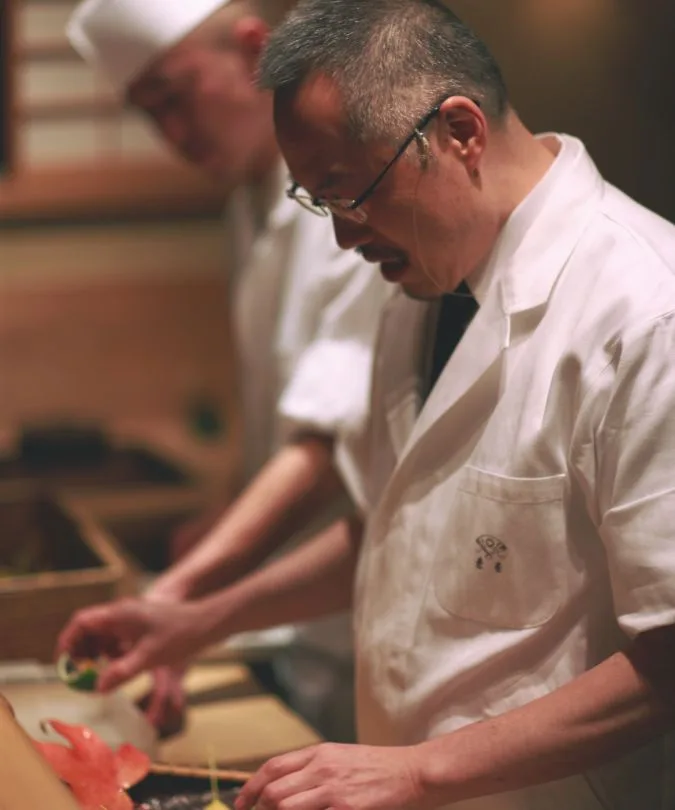
It is a fifteen minute walk from Mizai back to the Park Hyatt, and the chef walks you out while an apprentice lights the stone steps with a hand lantern.