Japan with Two Boys (Ages 8 & 10) — Tokyo to Kanazawa
A 12-day family Japan itinerary: Tokyo for the anime fan, the Japan Alps by rental car, and Kanazawa as a calmer, cheaper stand-in for Kyoto.
By JeremyJeremy and Jason run Splash of Color Travel together.
This is a planning example, not a client itinerary. It shows how we would shape 12 days for a hypothetical family: two parents who travel to eat, an anime-obsessed 8-year-old, and a 10-year-old who tires of long walks. Read it as a window into the decisions we make about pace, comfort, food, and logistics. Your version would be tuned to your dates and your group.
If you want a trip like this built for your own family, book a call and we'll take it from there.
The family in this planning example
Picture two parents who travel to eat, an 8-year-old deep into anime and arcade games, and a 10-year-old who travels well but tires of long walks and loses interest fast. Every choice below is shaped by that: indoor anchors the boys will actually like, food the parents care about, and days that never ask the 10-year-old to walk a castle ground until he's done. When this trip skips a famous sight, it's on purpose.
These parents care about comfort, but they also love a good deal. The goal isn't spending the least, it's getting the most for what they spend. So this trip is built for bang for the buck. We splurge where it's worth it (the Hida beef night) and we save where the spend doesn't show (Kanazawa over Kyoto, village shops over tour-bus stops). Good value isn't the cheap option. It's the right option at a fair price.
Day 1–4 — Tokyo
We start in Tokyo to front-load things because excitement and jet-lag will most likely have everyone up extra early. Japan is not the biggest morning country, but one fun activity to do if you're up extra early is to visit the Round 1 in Ikebukuro that's 24 hours. It's an arcade with a bunch of unique games only found in Japan (try the train simulator game after riding the subway) and claw machines where you can win plushes.
The subways won't start until 6 am. Another smart thing for jet lag folks is to go to Toyosu Fish market early. The famous Tsukiji closed many years ago, but it's always fun to watch how they transport and sort all the fresh fish before getting to sample the deliciousness at one of the many stalls.
Where to stay: Tokyo hotel rooms are notoriously small, which matters more with a family of four. Two of our reliable favorites are the Tokyu chain and APA hotels. Both are value-minded, but are genuinely comfortable and have full featured amenities. The price savings also lets you book two rooms so the family can spread out instead of stacking on top of each other. Jason and I have stayed at the Shinjuku locations, but for this example we would choose one in Akihabara, about 5 minutes from the subway station (APA Hotel Akihabara Suehirocho Ekimae) so the anime-loving 8-year-old could pop out somewhere different each evening without a train ride. APA also has an onsen and laundry rooms, and we used the onsen in our hotel everyday.
Staying near Akihabara is the key trick for your family. Instead of one exhausting all-anime day, the 8-year-old browses a bit on the way back to the hotel each evening as you go out to dinner nearby. He gets to look without buying everything at once, and over four days he figures out the things actually worth taking home. Day 1 is the deep dive; the other nights are short, happy laps.
Uber/Taxis are also quite affordable in Tokyo especially when shared by a family of 4, so if anyone gets tired of walking, that's always an option.
One neighborhood per day. Tokyo is huge, and the fastest way to exhaust two kids is to crisscross it all day. So each day is built around a single area: you see a cluster of things on foot, come back, done. Three themed days. We gave a variety options and recommend stopping whenever. It's not a checklist to complete.
The days are also swappable once you know the weather, if you want to prioritize a more outdoors day when it's bright and sunny.
Day 1 — Akihabara + Akasaka
Anime and arcades in the morning, a calm shrine to balance it.
- Akihabara (deep dive) — the one focused anime morning: multi-floor goods stores, retro games, gachapon. (You'll also be back here most evenings)
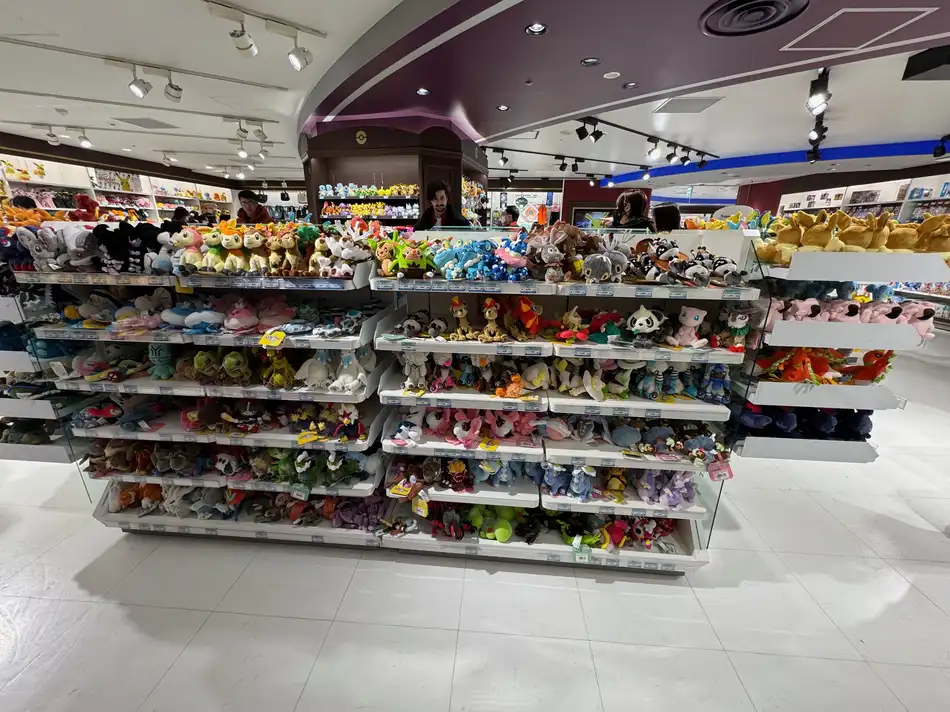
- Round1 / Sega / GiGO arcades — crane games and arcades. The 8-year-old's highlight; the 10-year-old stays engaged because it's active, not a walking tour.
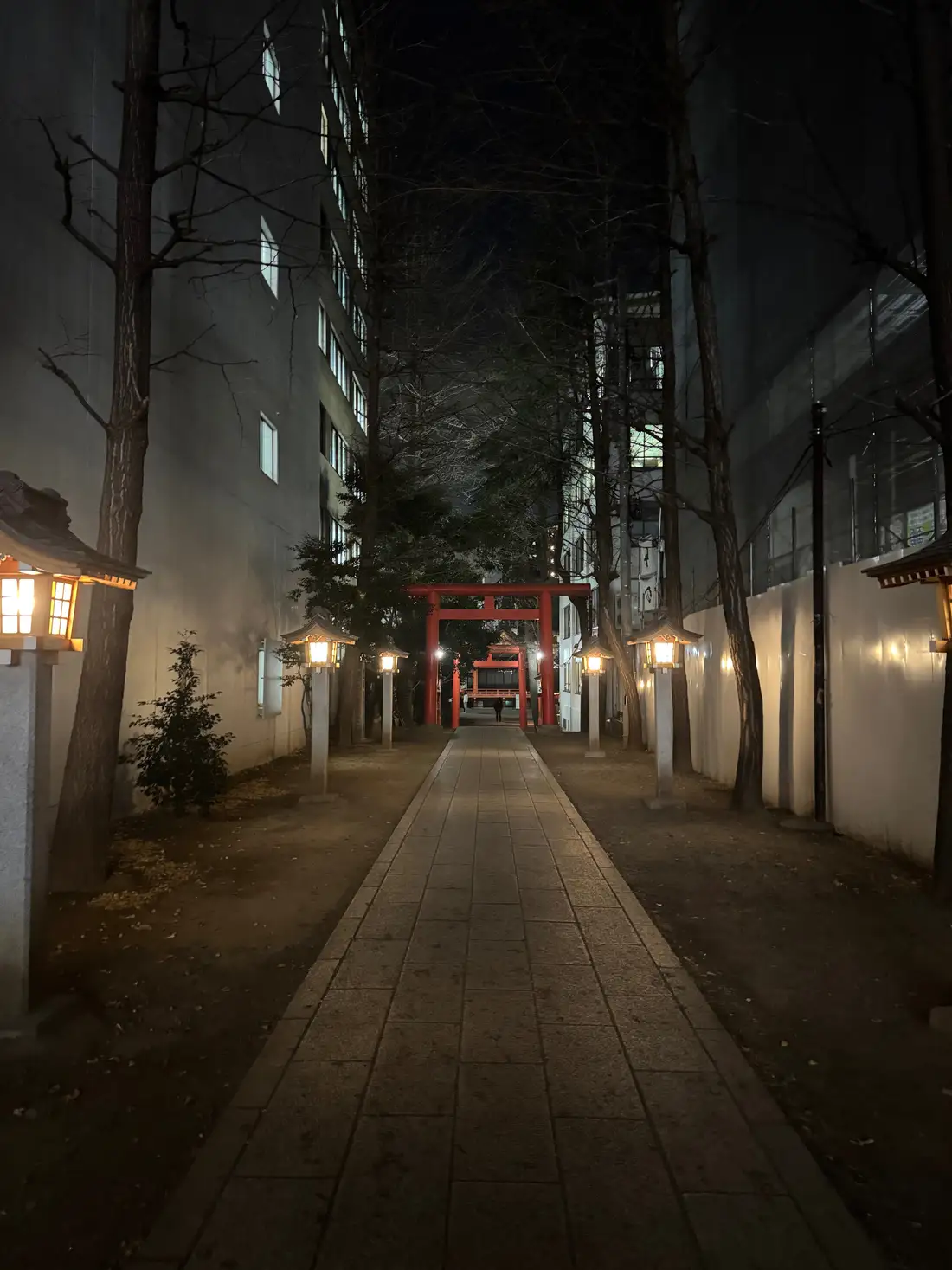
- Akasaka / Hie Shrine — a calm, short shrine visit that doesn't turn into a march.
- Imperial Palace — exterior only. Look at the main grounds and the bridge, then move on. We recommend skipping the long inner walk for the 10-year-old's sake.
Day 2 — Odaiba (the bay)
Easy, spacious, mostly indoor. (Swap this day to later if you see rain.)
- teamLab Planets: immersive digital projected art, water rooms, dark rooms. Indoor, rain-proof and you can book the timed entry ahead.
- Miraikan science museum — hands-on, all indoor. Doubles as the rainy-day anchor.
- Unicorn Gundam, Odaiba — the transforming statue; quick win for the 8-year-old.
- DiverCity / Odaiba malls — food court + shops if you need an easy lunch and a sit.
Day 3 — Asakusa + Ueno (old Tokyo)
The traditional side, plus a park the boys can roam.
- Senso-ji Temple & Nakamise street, Asakusa — Tokyo's iconic temple and a souvenir/snack street that keeps kids moving. Short and lively. Get the sugar coated fruit; they're a fun, tasty snack
- Ueno Park — wide open; pick one of its anchors so it's not aimless: Ueno Zoo (pandas) or the National Museum of Nature and Science (hands-on, indoor if it's a rainy week)
- Ameyoko market — street food and cheap finds under the train tracks; fun, casual, edible.
- Kappabashi kitchen street - famous place to buy kitchenware and somewhere to begin knife shopping. We recommend getting Kai nail clippers as presents for people at home. They're amazing quality.
Day 4 — Rest Day
Keep one day open: find another version of the family's new favorite dish, finish anything you missed, or just rest and enjoy a slow morning before traveling tomorrow. With kids, a free day isn't wasted time.
Tokyo food — eat for convenience, sample widely
Don't spend your big wagyu meal in Tokyo. The standout beef on this trip is Hida beef in Takayama (Day 5–6). Save the splurge for there. In Tokyo the goal is different: eat conveniently, near wherever you already are, and sample broadly so you learn what the boys actually like. Food in Tokyo is pretty reliably good almost everywhere. It's hard to eat badly, so the real skill isn't finding "the best," it's not wasting your limited meals.
Side-note: do try one convenience-store curiosity. The viral 7-Eleven egg sando is worth the one-time novelty (the kids will film it for their social media), but then move on. A so-so konbini lunch or a forgettable station bento is a meal you don't get back. Spend the real slots on real food.
Japanese foods worth trying for this family:
- Soba — and specifically cold dipping soba (zaru / tsukemen-style). It gives the boys another noodle option if ramen does not land. Order it even if they hesitate.
- Ramen — a reliable kid win; still great, just not the surprise soba was.
- Japanese curry — mild, hearty, deeply kid-friendly; an easy night.
- Tempura — light and crowd-pleasing.
Sushi, make it a thing, twice. Do both ends of the spectrum:
- Rotating / conveyor sushi — fun, cheap, low-pressure, and the kids control the pace. Great first sushi. Sushiro or Kura are reliable staples
- Toyosu Market sushi stand — the morning-fresh, standing-counter experience at the fish market. Go early; the lines move and the fish was on a boat a few hours ago.
- One proper sushi dinner — one sit-down where the parents get the real thing. We'll match a counter to your budget and how adventurous the kids are.
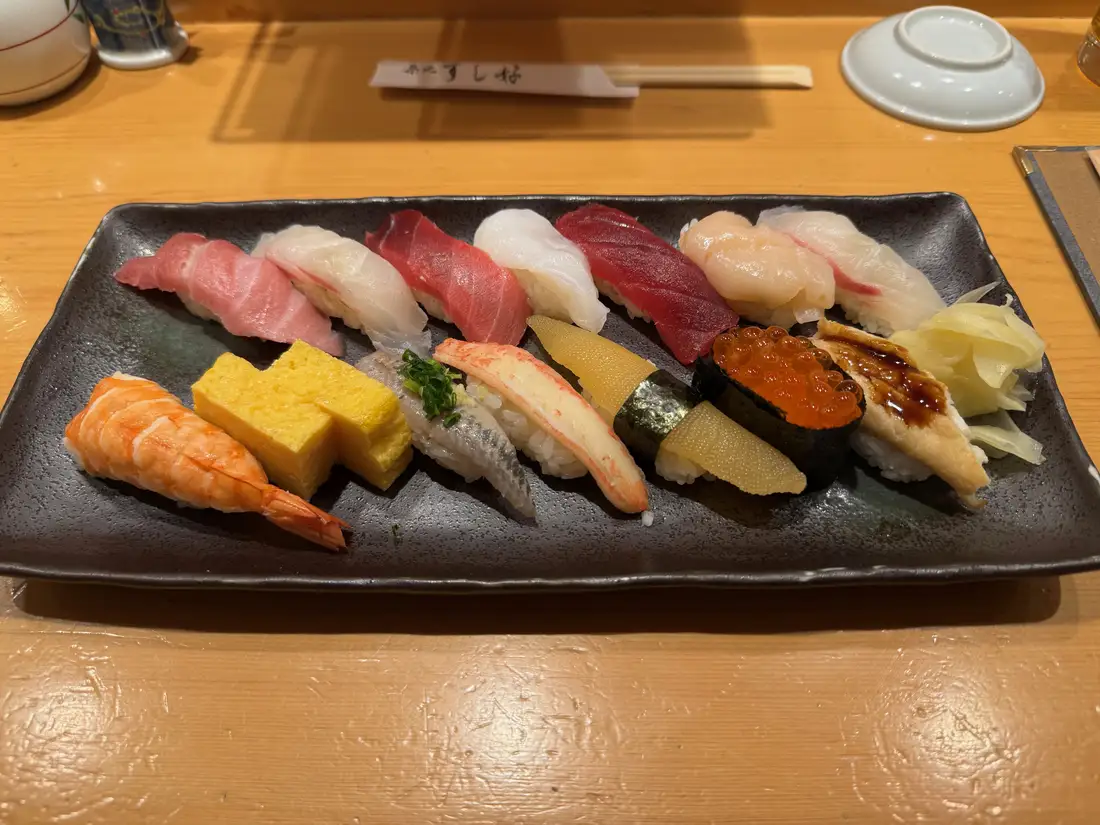
A few more casual Tokyo eats that fit this example:
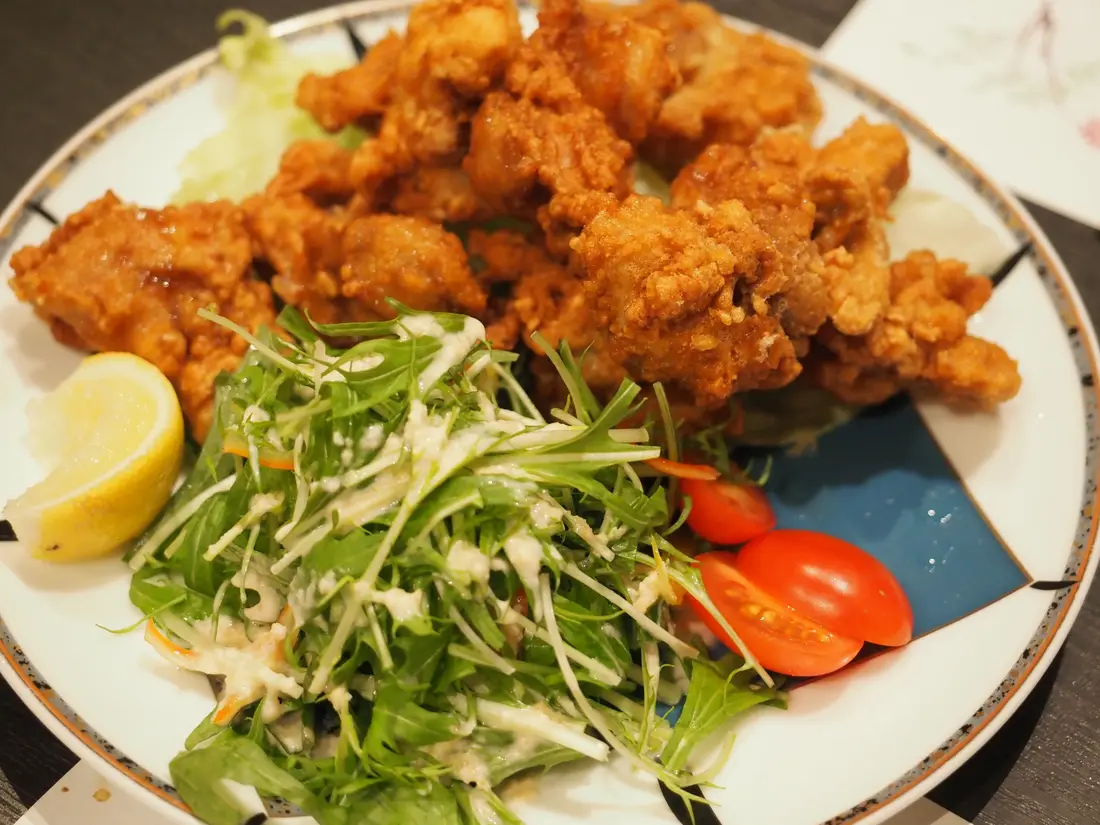
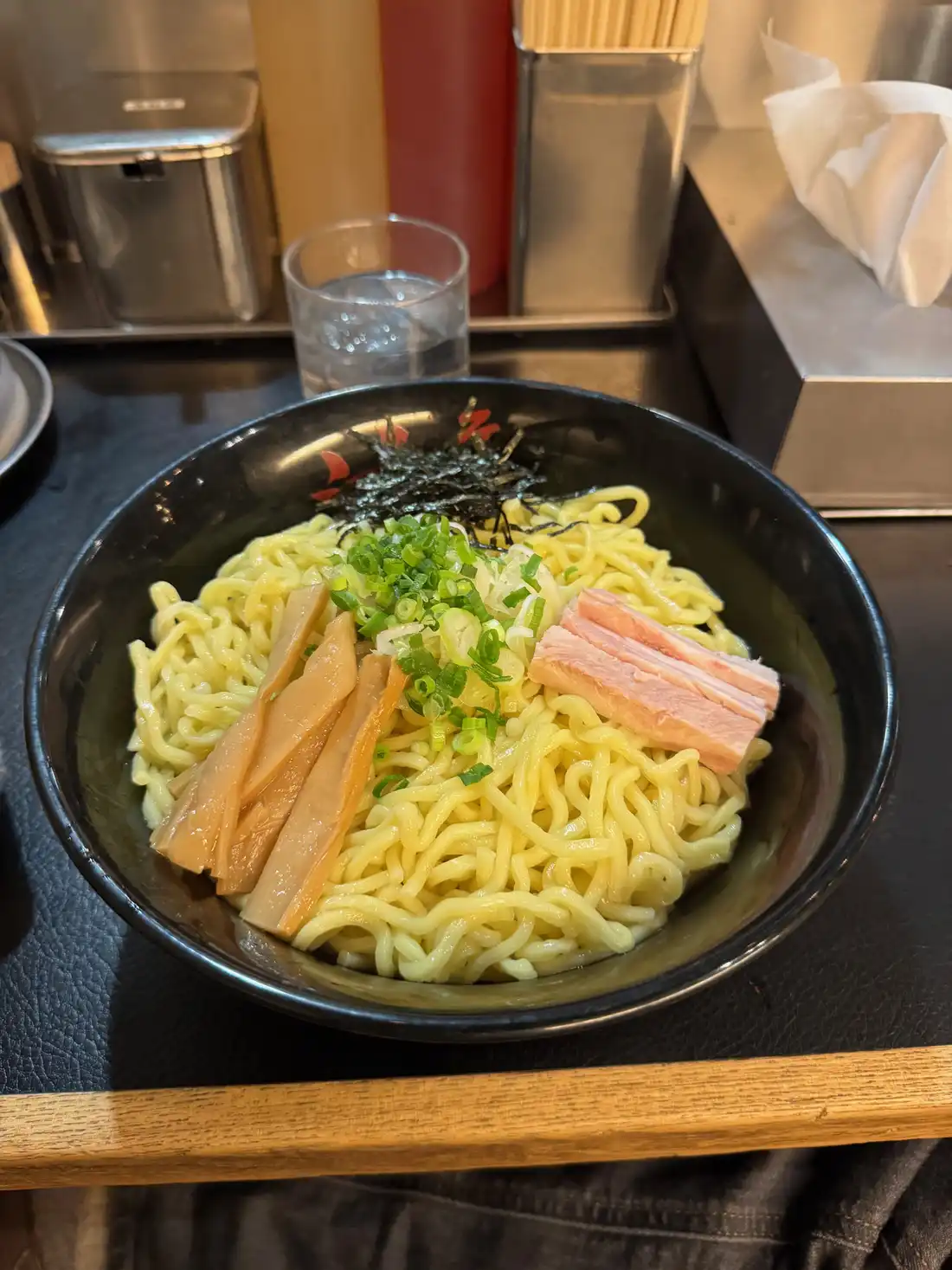
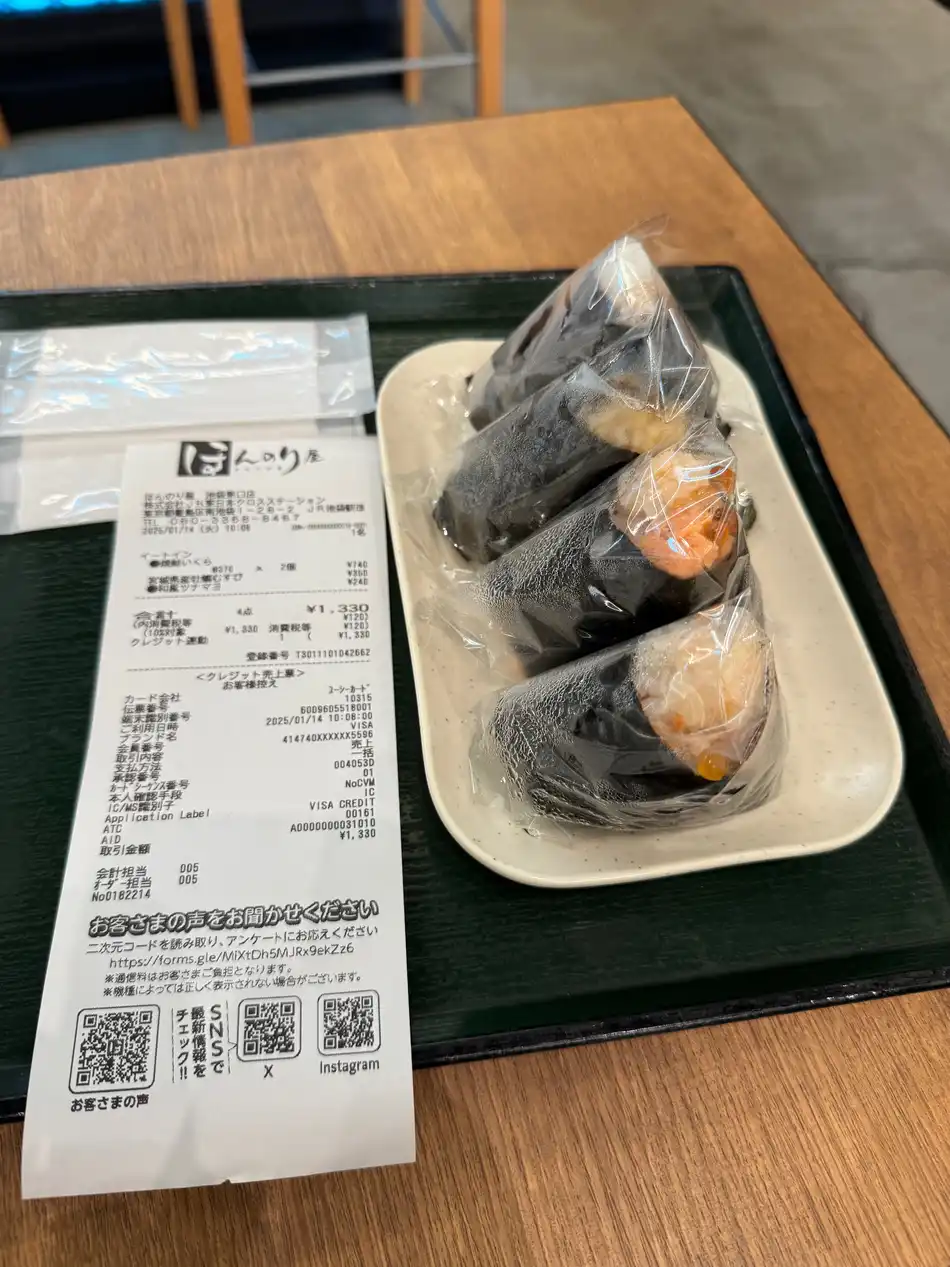
And when the kids are sick of Japanese food, Tokyo pizza is a genuinely good break. The city does Neapolitan pizza well, the Italian original with its own twist, so it's a real meal and not a compromise.
How to actually book (use Tabelog). Tabelog is Japan's restaurant review site, and it's the easiest way to lock in a table for four, which matters, since many good Tokyo spots are tiny and can't seat a family on a walk-in. Our method:
- Filter by cuisine or the dish you want, then set the map radius to about 0.5 km from where you'll already be that day. Eat near your plan, don't detour across the city.
- Read the score, but recalibrate it. Tabelog scoring is famously strict. Japanese reviewers are tough graders. Anything above 3.0 is some genuinely excellent food, and a 3.5+ is exceptional. For reference, plenty of Michelin-starred restaurants barely clear 4.0. A "3.6" is not mediocre; by Tabelog's curve it's a destination.
- Book the table for 4 through the site so you're not turned away at the door.
Tokyo — kitchen knife teaser
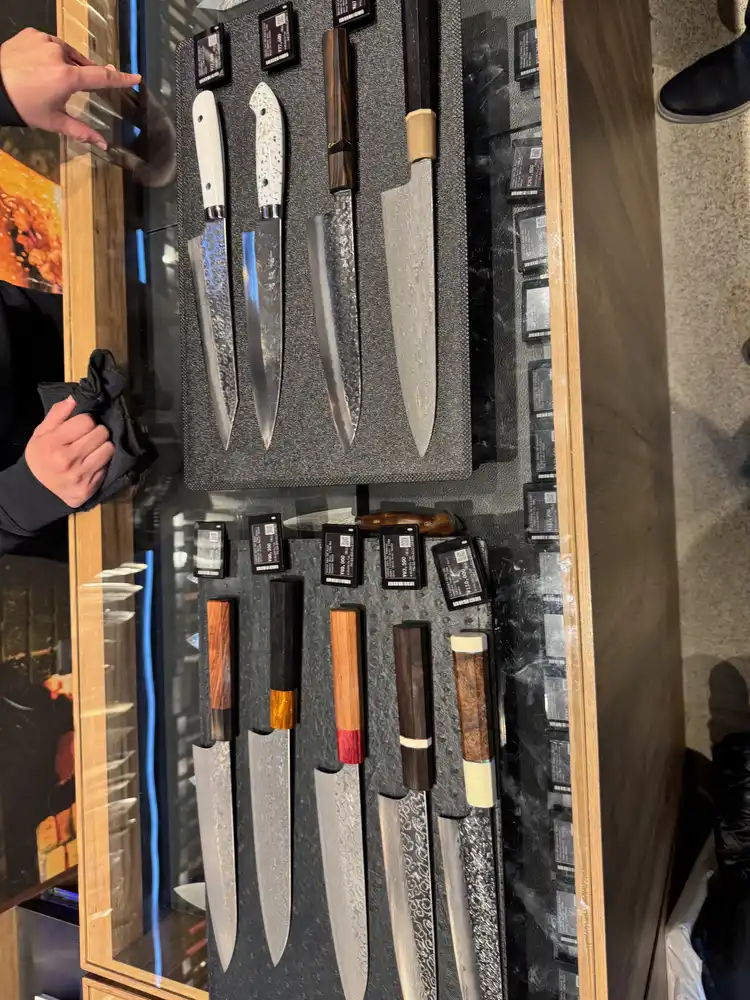
The dad in this example wants a Japanese kitchen knife as his main souvenir. Jason and I are both knife people ourselves, so this is the one area where we go deep. The short version: work through handle first, then steel, then blade shape, in that order. Each step narrows the field considerably. We have specific shop picks in Tokyo and Kanazawa, plus a buy-later trick if you want to compare prices mid-trip. Full knife guide in the appendix below.
That is four days of Tokyo, planned around two specific kids. We do this for the whole trip, and we would do it for yours. Book a 30-minute call and tell us who's going.
Transit — Tokyo → Nagoya (early-morning Shinkansen)
We book the trains a la carte rather than buying a rail pass. For a loop like this, a few long legs instead of daily long-distance hops, point-to-point tickets come out cheaper than a 7-day JR Pass. Catch an early-morning Shinkansen to Nagoya. Short stopover:
- Nagoya chicken (Cochin) lunch — the regional specialty, easy to find right in the station · local Nagoya chicken · $$. The 8-year-old will want a photo with the Cochin chicken mascot around the station.
- Grab a special bento (Ekiben) for the onward leg or the Shinkansen Bento for a souvenir
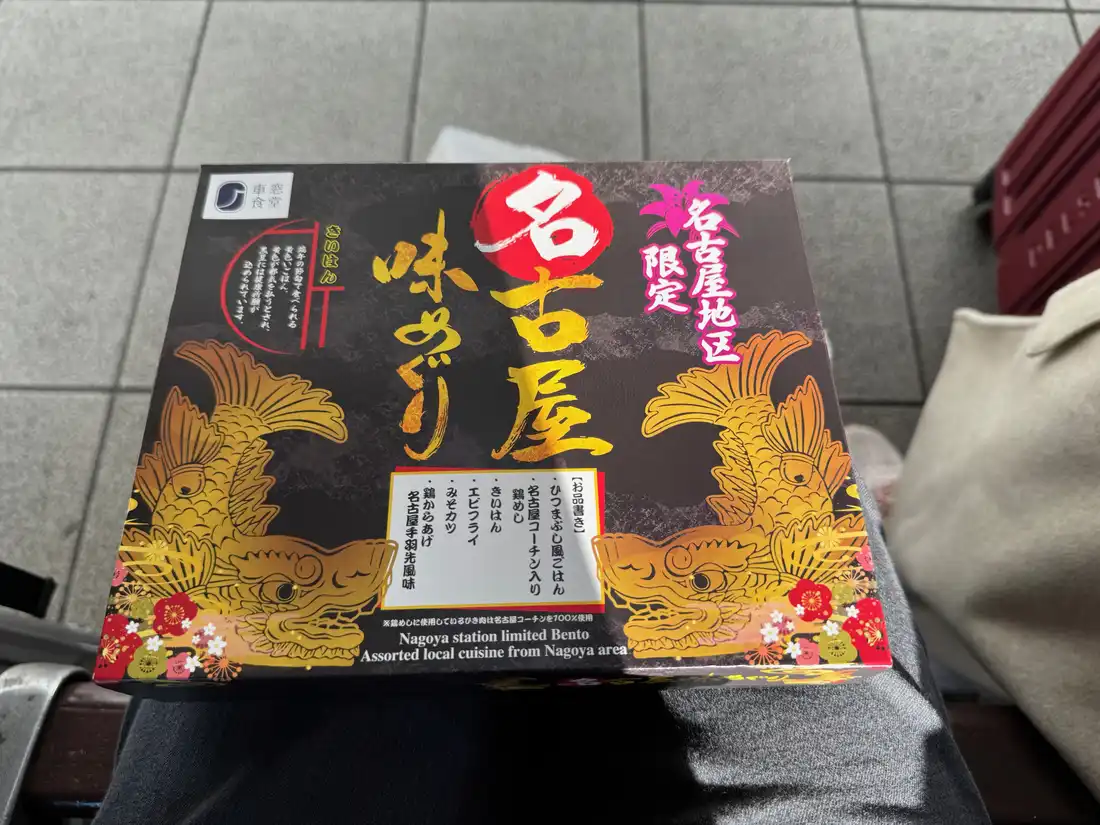
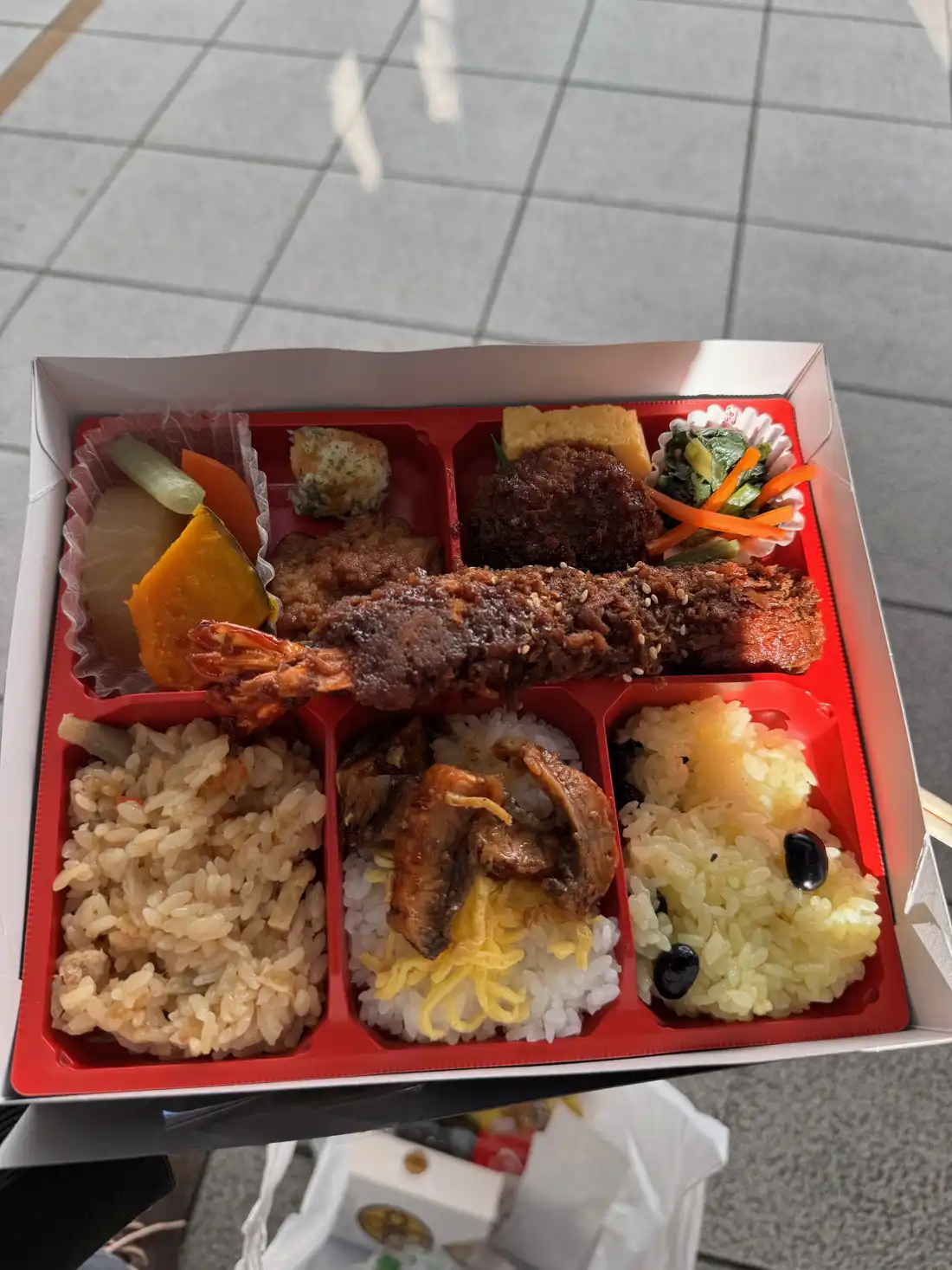 Half the fun is the box.
Day 5–6 — Takayama (via Gifu express)
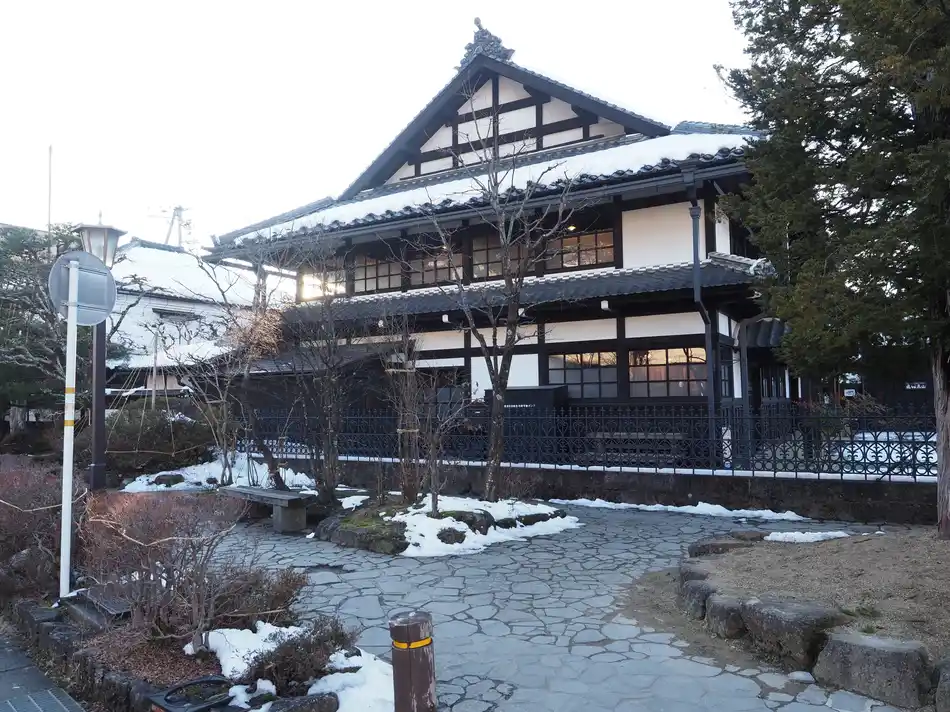
Two nights in the old castle town. Slower pace, mountain food, an onsen to reset.
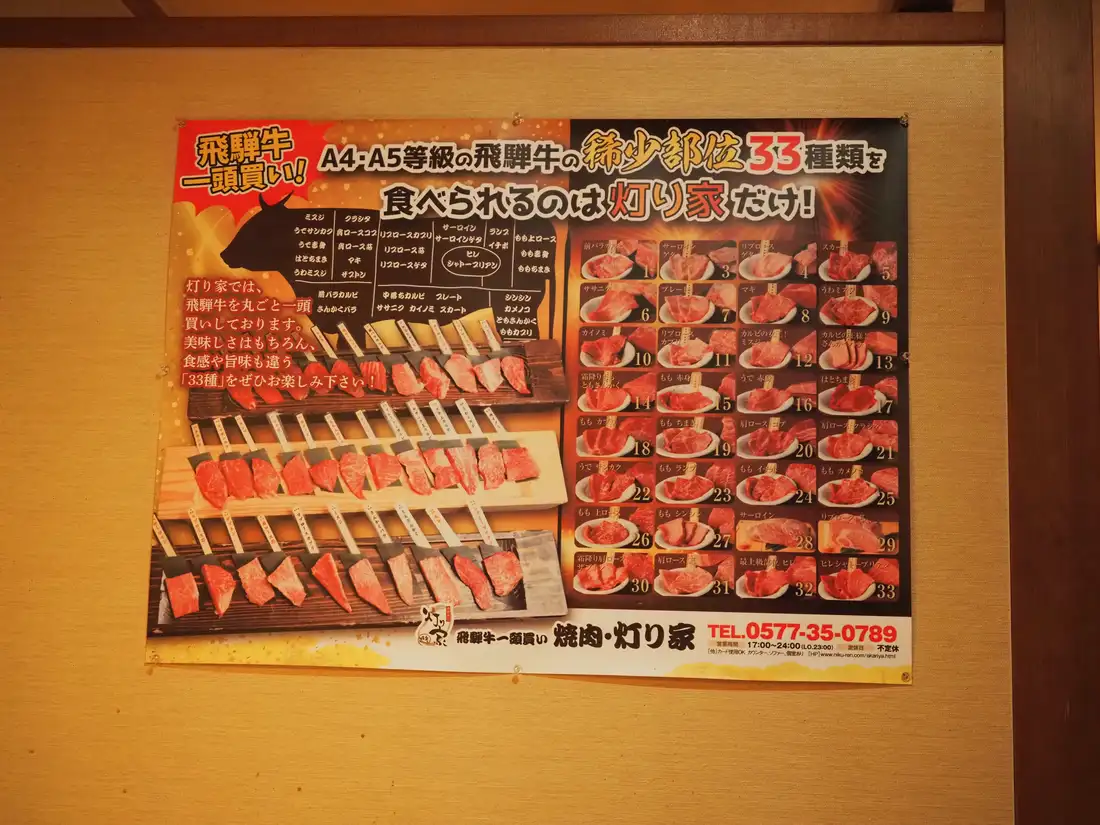
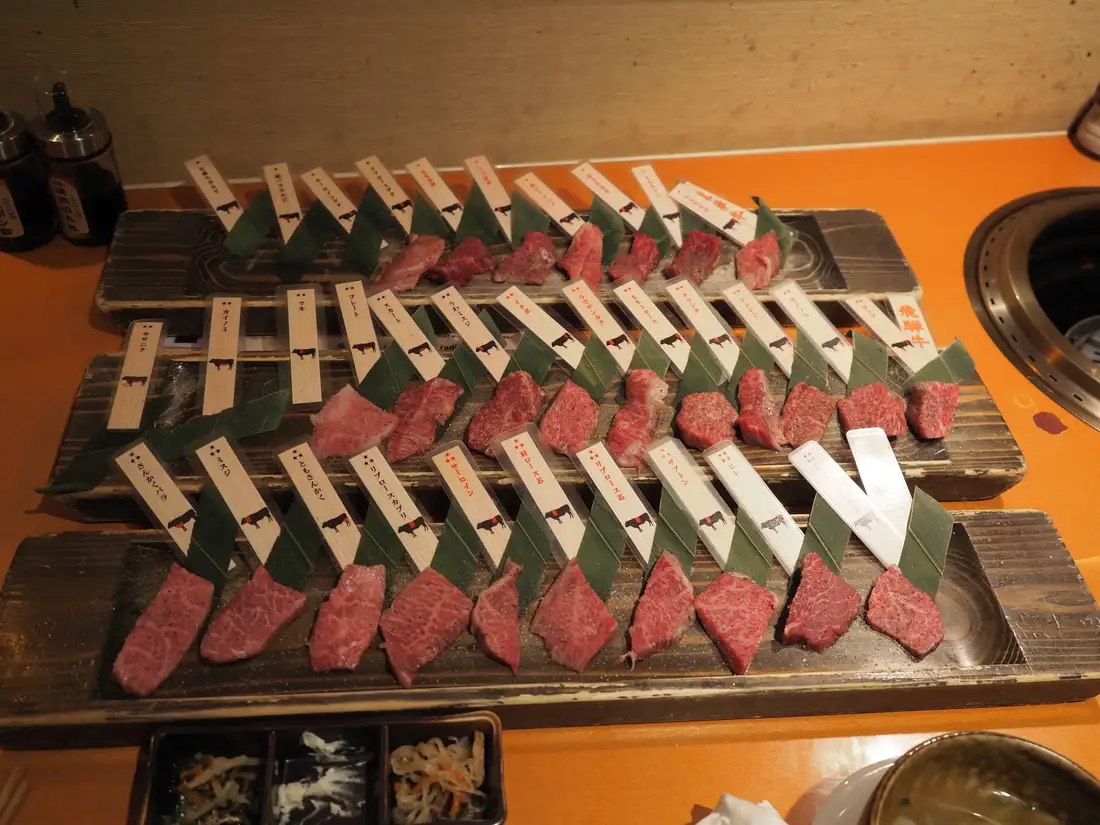
This is the wagyu meal. We held the beef splurge for here on purpose. Hida beef is the regional star, and it's worth building a dinner around rather than burning the big meal in Tokyo while you're eating on the move.
- Hida beef dinner — the trip's wagyu moment. Hida Gyuu Ittougai Yakiniku Akariya · Hida beef, 33 cuts to try · $$$
- Hida beef on the street — skewers or a beef bun from the stalls in the old town, so the boys get a taste without a full sit-down.
- Takayama Showa-kan museum — nostalgic, indoor, genuinely fun for kids.
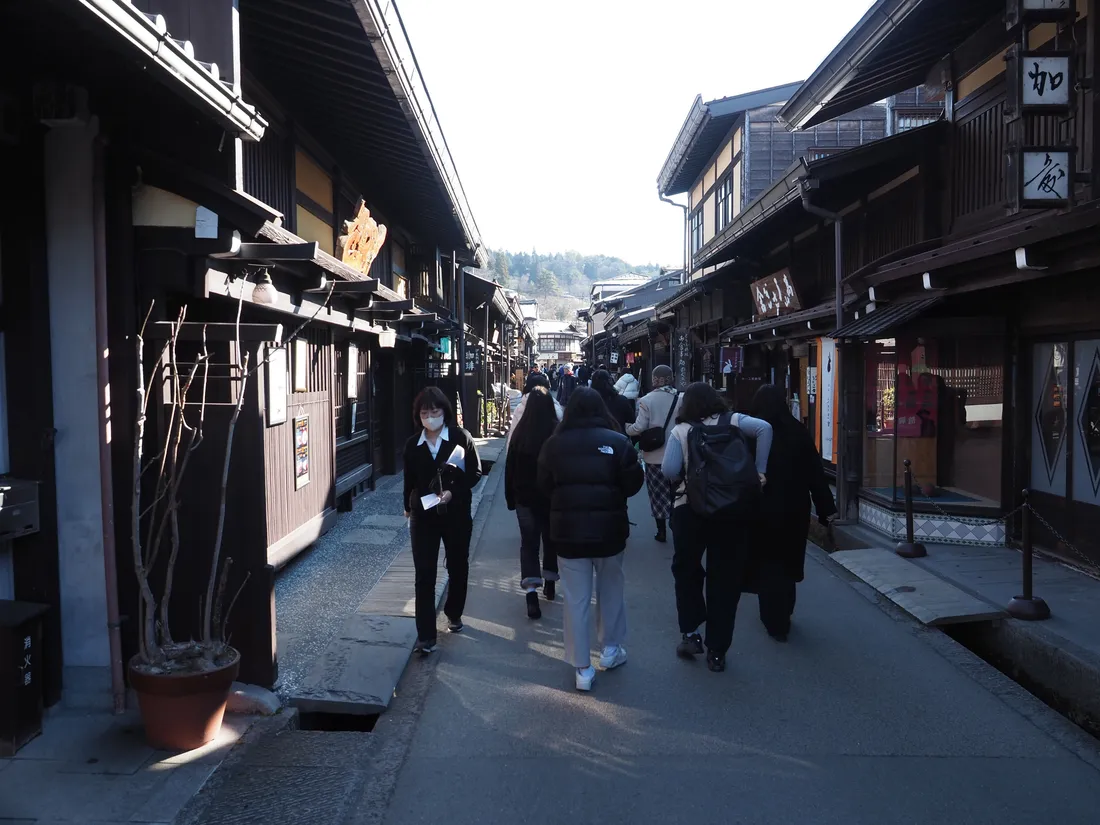
- Old town (Sanmachi) walk — preserved merchant streets; short and flat enough for the 10-year-old.
- Private Onsen each evening — at the hotel.
Day 7 — Takayama → Kanazawa by rental car (via Shirakawa-go)
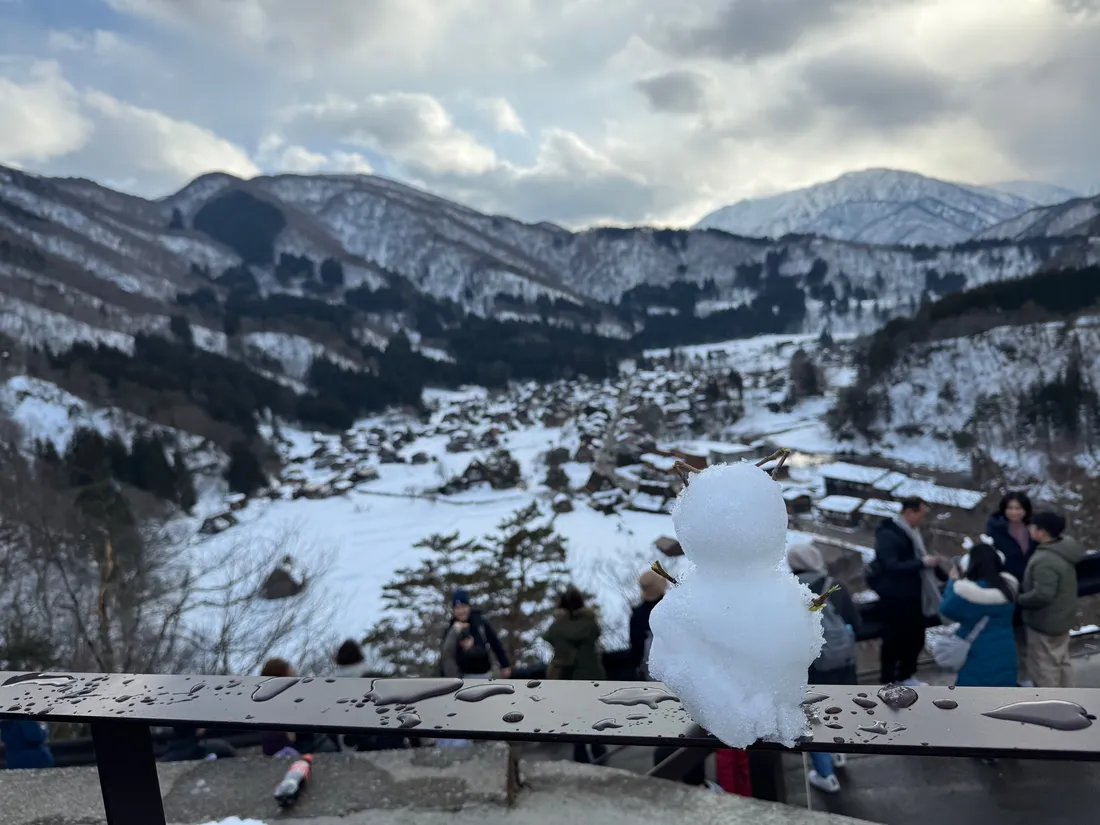
Pick up a one-way rental car in Takayama and drive to Kanazawa, taking the scenic route through Shirakawa-go. The car is what makes this leg work on your own schedule, not a tour bus's.
- Shirakawa-go — the thatched-roof village. Walk the main area, climb to the lookout.
- Miboro Lake — pit stop on the way; quick photo and a leg-stretch.
- Omiyage tip: buy your souvenirs at the village shops, not the tour-bus stops. The gift shops outside the tour-bus circuit are noticeably cheaper for the same items. (One we've learned firsthand.)
Day 8–10 — Kanazawa
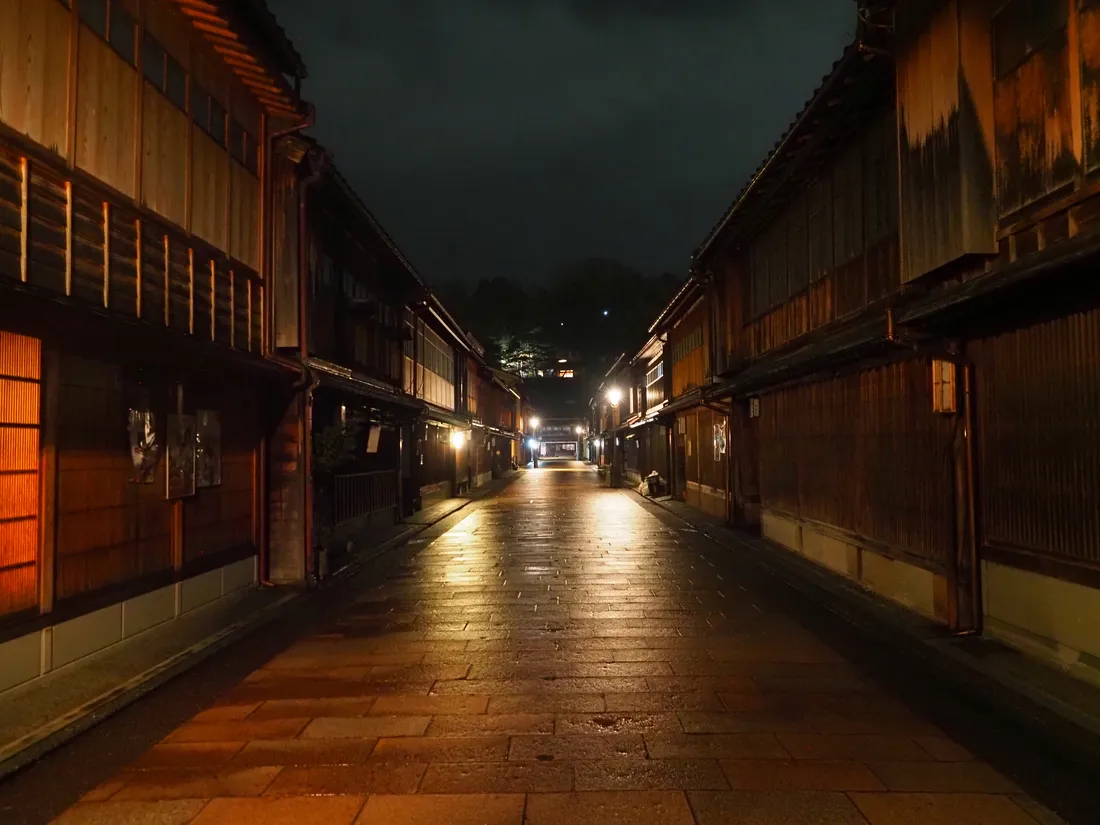
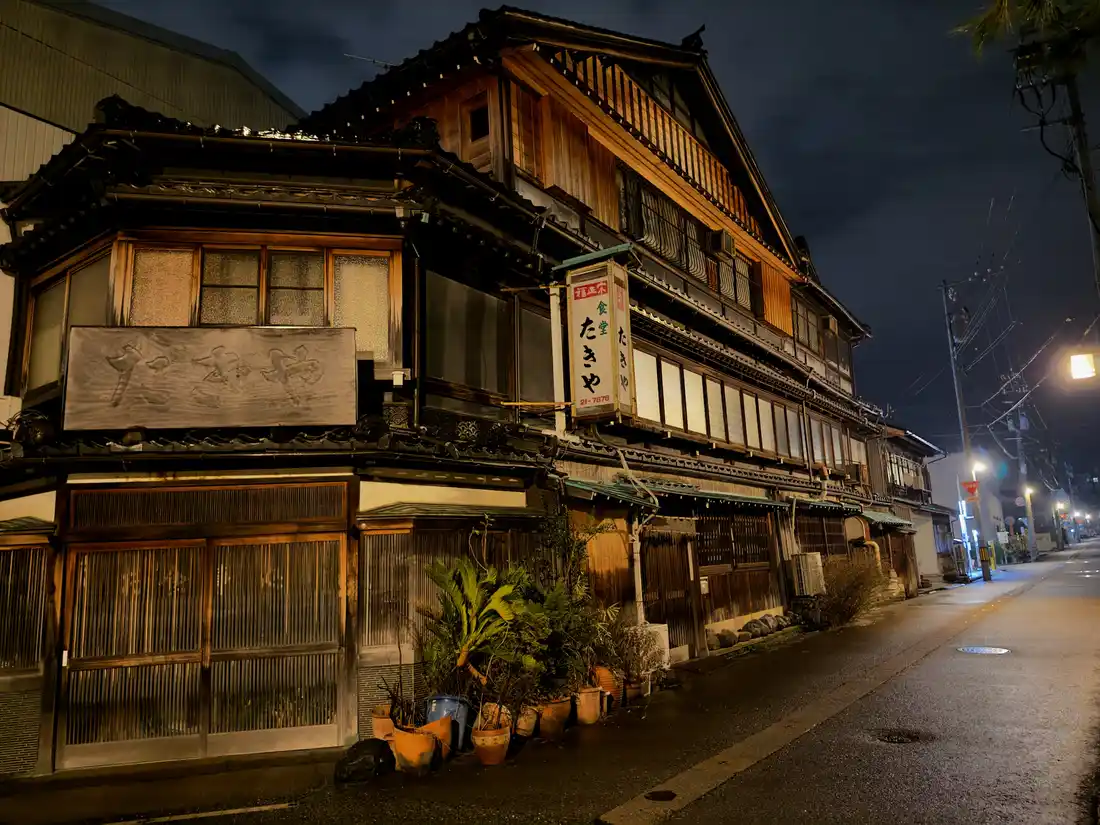
Three nights. The most relaxed stretch of the trip: gardens, crafts, food, all walkable in short loops.
Why Kanazawa instead of Kyoto. Kanazawa gives you most of what people go to Kyoto for: historic shrines, preserved samurai districts, kimono dress-up, traditional crafts. And it's far more budget-friendly. The real trade-off is fine dining. Kyoto has a Michelin scene Kanazawa doesn't match. But with two young kids those reservations were never realistic anyway. So you give up a tier of restaurants you probably wouldn't have sat through, and in exchange the hotels cost a fraction of Kyoto's, which means your money gets you a nicer, bigger room.
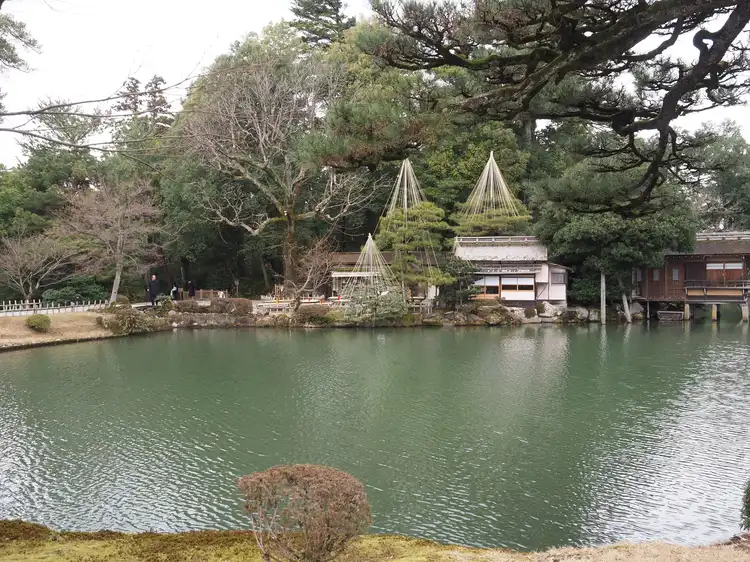
- Kenrokuen Garden — one of Japan's great gardens. Go early, keep the loop short.
- Kimono dress-up — the boys probably won't want to do it, but we love dressing up and have to always recommend. very affordable ~$30 per person for the whole day and the they drop off your clothes hotel/pick up kimono next day. Very convenient as well.
- Gold-leaf experience — Kanazawa makes most of Japan's gold leaf; try gilding a small piece, or the gold-leaf-topped soft serve. Easy win for the 8-year-old.
- Omicho Market — the city's seafood market and the food highlight of these three days (see picks below).
- 21st Century Museum of Contemporary Art — interactive and kid-friendly; the famous Leandro Erlich swimming pool is a quick win.
- Kanazawa Castle (Skip) — the 10-year-old doesn't enjoy castles, so we don't force it. (Same call as the Imperial Palace, we cut what won't land.)
Kanazawa food — the payoff stop
This is where the Tokyo "sample everything" work pays off. Whatever the boys discover they like, order the better version here. Soba is a strong example: if they get hooked in Tokyo, this is the place we send people:
- Soba — the spot we love. Aman · handmade soba · $$
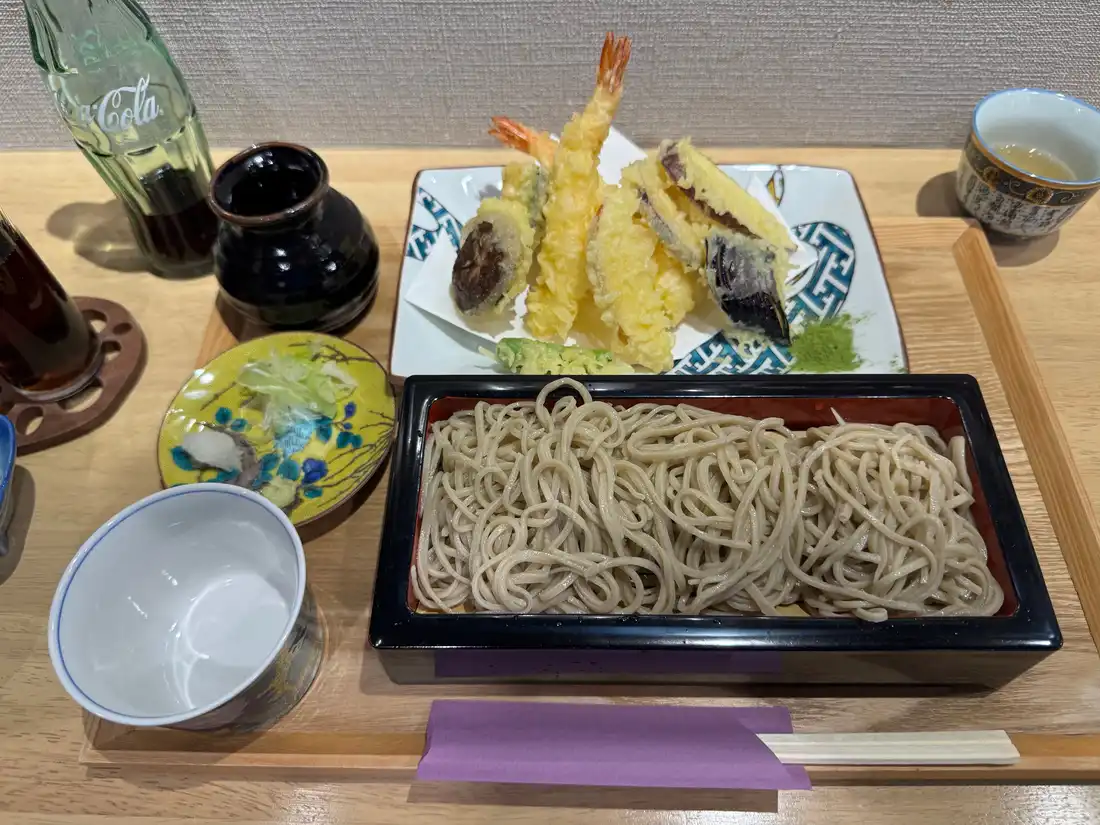
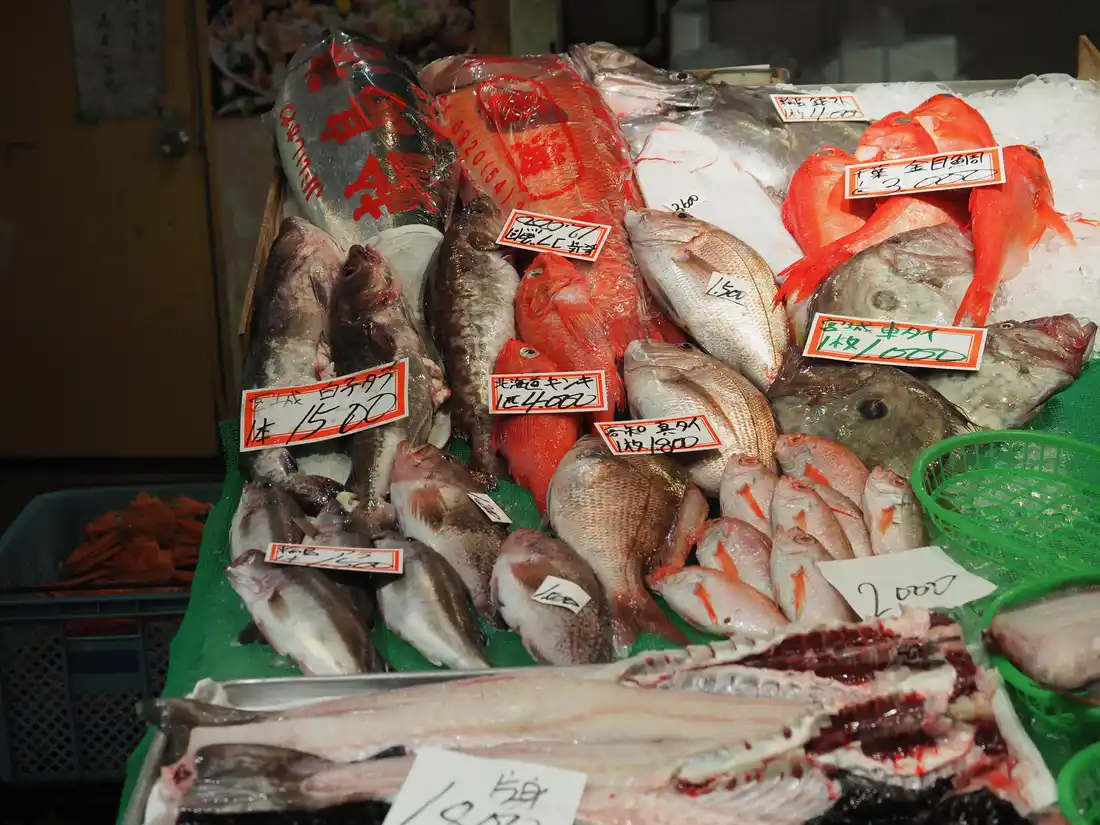
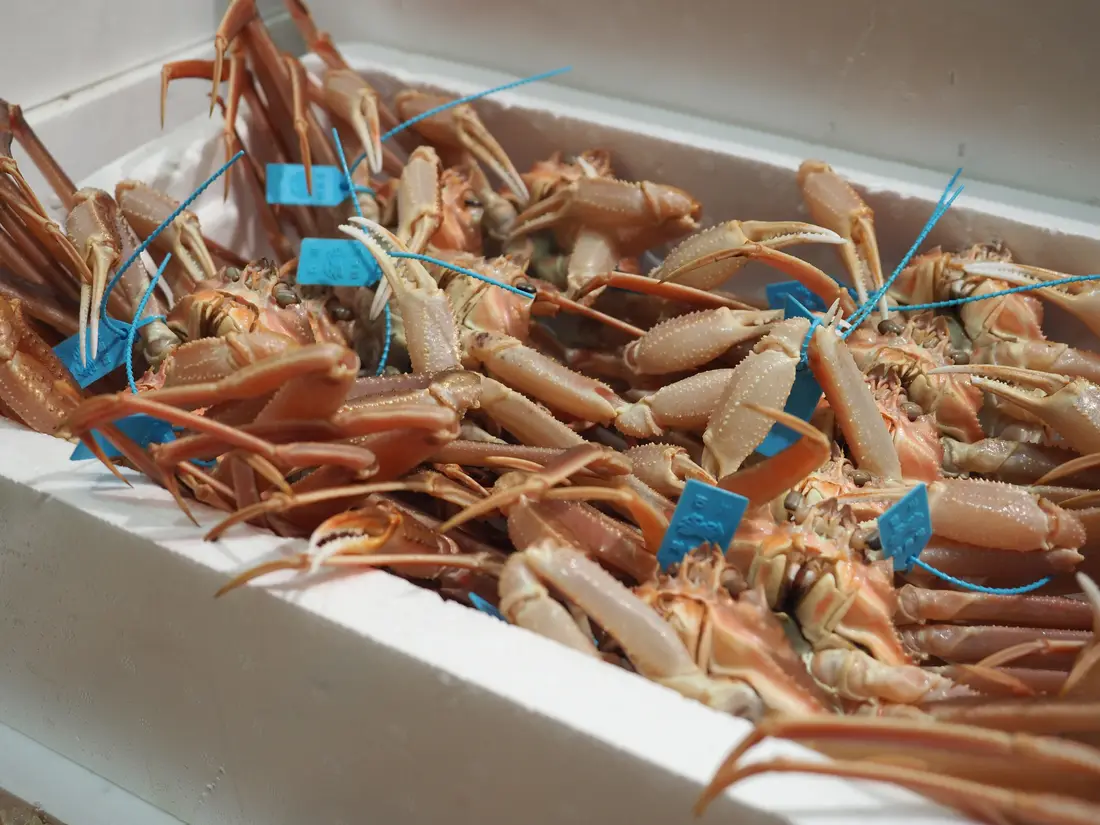
Kanazawa is a seafood town: cold-water fish from the Sea of Japan, at their best in the cooler months. At Omicho Market and the izakayas around it, three things to seek out:
- Snow crab — the regional prize in winter (look for kano-gani / local crab). At Omicho Market or the izakayas around it · $$$
- Nodoguro (blackthroat sea perch) — rich, fatty, melt-in-the-mouth; grilled or as sushi · $$$
- Buri (yellowtail) — winter yellowtail is a Kanazawa specialty; sashimi or buri shabu · $$
Kanazawa souvenirs
- Gold-leaf goods — small lacquerware, cosmetics, even gold-flecked sake. The signature Kanazawa take-home.
- Local tea — buy kaga bocha (the roasted-stem tea Kanazawa is known for); a light, easy-to-pack gift that actually gets used at home.
- Knife buy-later — if Dad noted models back in Tokyo, a Kanazawa department store is the stop to compare prices before committing.
Day 11–12 — Back to Tokyo, points splurge, depart HND
- Shinkansen back to Tokyo.
- One night at a Hyatt on points — the splurge finale. Earn the nice room for the last night without paying cash for it.
- Depart HND.
That's the whole trip. The right neighborhoods, a pace that works for a 10-year-old who hits a wall, the timing on Hida beef versus Tokyo wagyu, the bag-packing trick that gets a family of four home with eight bags of loot. Piecing all of that together yourself is a lot to sort out cold, and it's the part we do.
Book a quick call and tell us your dates, your kids' ages, and what they're into. We'll talk through what your version could look like, no obligation.
The detail below is the appendix: logistics and the full knife guide, for readers who want to see how the trip is actually put together.
Appendix — the full detail
The spine above is the trip. Everything below is for readers who want to go deeper before calling us: the complete knife guide, weather contingencies, and the logistics for bags, driving, and airports. A skimmer can stop above.
Buying a Japanese kitchen knife
The dad in this example wants a knife as his main souvenir, and Japan is probably the best place in the world to get one. Full disclosure: Jason and I are both kitchen-knife people ourselves, so this is the one section where we go deep and give some pretty firsthand recommendations. Since the knife is the thing he's bringing home, it's worth doing right rather than grabbing the prettiest blade in the case. Here's how we'd actually choose. Work through it in this order: handle first, steel second, shape last.
Start with the handle: feel and weight. Hold several. The right knife is the one that disappears in your hand, balanced at the pinch grip, not blade-heavy or handle-heavy, with a handle shape (Japanese octagonal vs. Western contoured) your hand likes. This matters more than anyone admits; a "better" knife you don't enjoy holding stays in the drawer. Don't buy anything you haven't picked up.
Then pick steel by how much maintenance you'll actually do. This is the real trade-off. Stainless (e.g. VG-10, ginsan) resists rust, tolerates the dishwasher-adjacent realities of a busy kitchen, and needs less babying: the honest choice for most home cooks. Carbon steel takes a scary-sharp edge and is a joy to sharpen, but it rusts if you leave it wet and develops a patina; only go here if you'll wipe it dry every time and enjoy upkeep. Be honest about which person you are at the sink after a long day.
Then choose blade shape by what you cook. Buy for your kitchen, not the catalog:
- Gyuto (chef's knife) — the all-rounder. If you buy one knife, buy this.
- Santoku — shorter, great for veg-heavy home cooking and smaller hands.
- Nakiri — flat blade for vegetables; lovely if you prep a lot of produce.
- Petty — small utility knife for fruit, garnish, detail work.
- Sujihiki / yanagiba — long slicers for fish and proteins; only if you actually break down fish or carve roasts.
Where to buy. You don't need a famous name. Tojiro and similar makers offer some pretty excellent double-bevel stainless gyutos at accessible prices. A first Japanese knife you won't outgrow quickly. There are also two high-end specialists worth visiting for the experience and to handle the top end, one in Tokyo and one in Kanazawa:
- Seisuke Knife (Tokyo) — high-end, aspirational. Worth seeing; we don't recommend buying here unless you've owned Japanese knives before and know exactly what you want.
- Byakko Knives (Kanazawa) — the Kanazawa counterpart, same advice.
- Kama-Asa (Tokyo, Kappabashi) — where we'd actually buy a Tojiro-tier gyuto. Most shops on the street have similar prices and do free engraving, but Kama-Asa has English-speaking sales representatives who will explain everything to you.
Buy-later trick: if you fall for a model in Tokyo but want to compare, note it and check a Kanazawa department store later in the trip. The bigger stores often carry the same or comparable models, occasionally at a better price.
Contingencies — rain / snow
- Tokyo rain → teamLab, Miraikan, and Round1 are all indoor; reorder the days so the outdoor stops (Odaiba Gundam, shrines) move to a clear day.
- Takayama snow → lean into it: onsen + Showa-kan museum day, hot Hida beef dinner.
- Shirakawa-go closure or heavy snow on the drive → skip the village, go straight to Kanazawa, and add the extra time to a Kanazawa museum or Kenrokuen.
Logistics — baggage & shipping
Travel light. The trick that makes this whole loop comfortable:
- Pack into 3 carry-on bags + 4 backpacks for the family. No wrestling big suitcases on Shinkansen platforms or into a rental car.
- As souvenirs pile up, ship the heavy bag ahead to the airport (takkyubin / luggage forwarding) so you're not hauling it through Takayama and Kanazawa.
- You collect everything at the airport on departure day. Lighter trip, same loot.
Plan on doing laundry. Over twelve days with this many stops, two big checked bags per person isn't realistic. You'd be hauling them on and off trains and in and out of a rental car at every change. This plan assumes the family is comfortable doing laundry once or twice during the trip. That choice changes everything. Pack for about a week, wash midway (most hotels and ryokan have coin laundry, or we arrange it), and you move light the whole time. The bonus: the suitcase space you're not using for clothes is space for souvenirs on the way home.
You have room for souvenirs. Use it. A family of four flies home with 8 checked bags of allowance, and almost everyone wants to bring things back. Right now that's especially worth it: the weak yen against the dollar makes shopping a genuine value, and Japan's tax-free shopping (for tourists, when it applies) sweetens it further. So we plan the bags around coming home heavy. The packing trick is to nest on the way out: a medium suitcase tucked inside a large one (think Matryoshka doll), plus folded duffels and hotel-provided bags, so you fly out compact and unpack into full bags for the trip home. We'll walk you through exactly how to set this up for your family.
Logistics — driving in Japan
- Get an International Driving Permit (IDP) before you leave home. Easy to obtain; required to rent. Just wait in line at a AAA.
- The one-way rental (Takayama → Kanazawa) is what unlocks Shirakawa-go and Miboro Lake on your own schedule, instead of a fixed tour-bus timetable.
- Roads are well-signed and calm outside the cities; this leg is very doable for a first- time-in-Japan driver. Just remember to speak aloud when turning if you come from a country that drive on the right. "I'm in the left lane turning right into the left lane" or "I'm in the left lane turning left into the left lane"
Logistics — airports
- Arrive and depart HND (Haneda). It's closer to central Tokyo than Narita, which means less transit time on your first and last days, exactly when you want it easy.
Extra details below
One more, because the food is half the reason you go. Cafe Uemura is an option I love, and the chef comes highly recommended, so it's the kind of meal I'd build a night around for you.
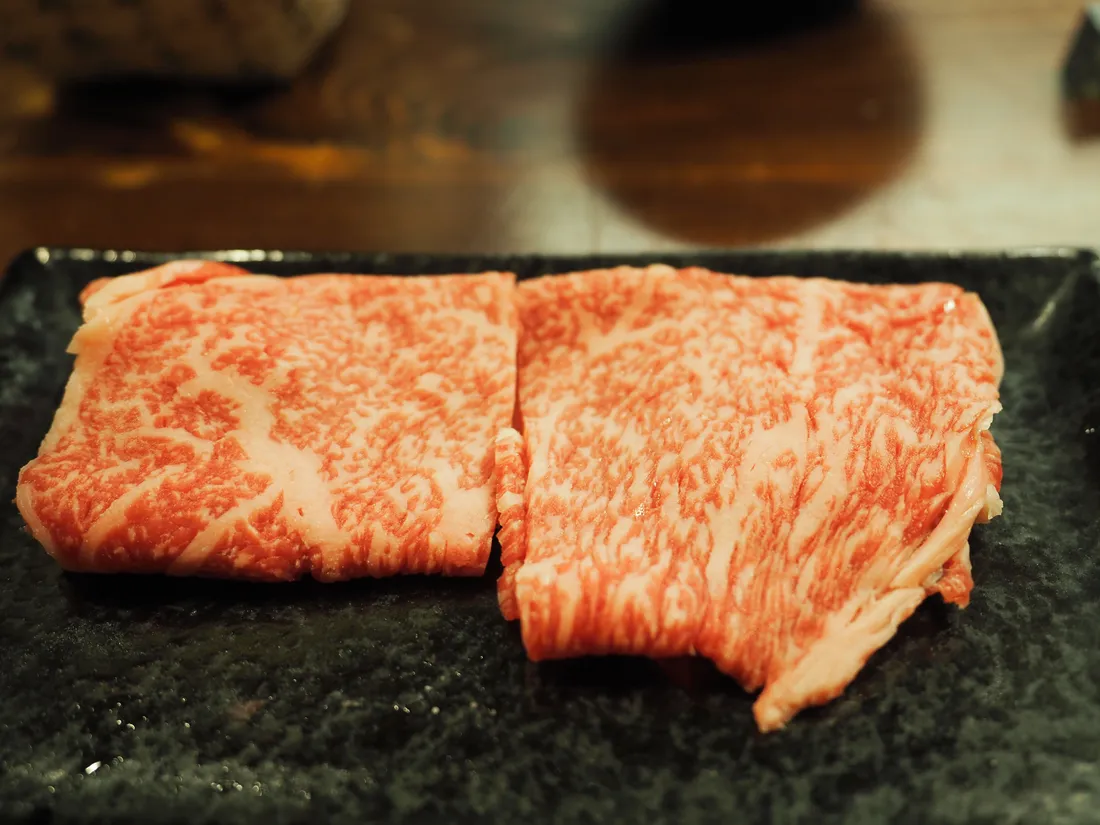 The full spread at Cafe Uemura before it hits the grill.
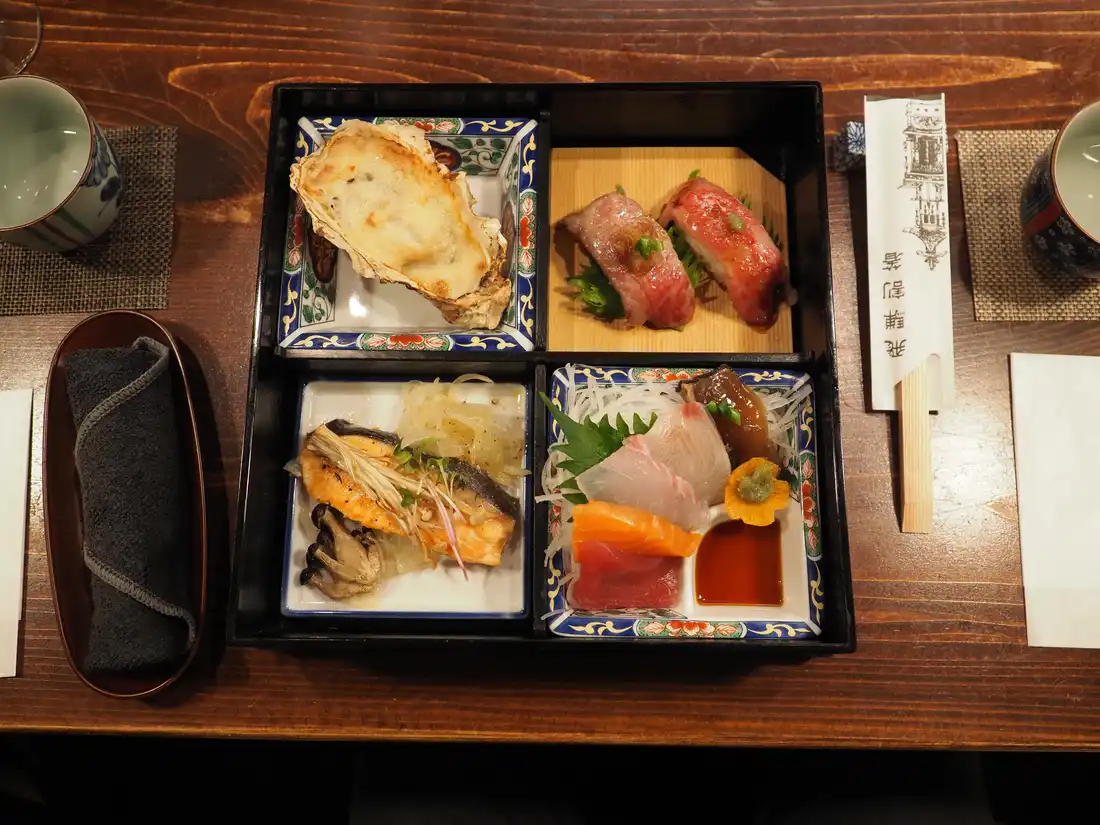 Baked cheese oyster, Hida beef nigiri, salmon, and a sashimi selection.
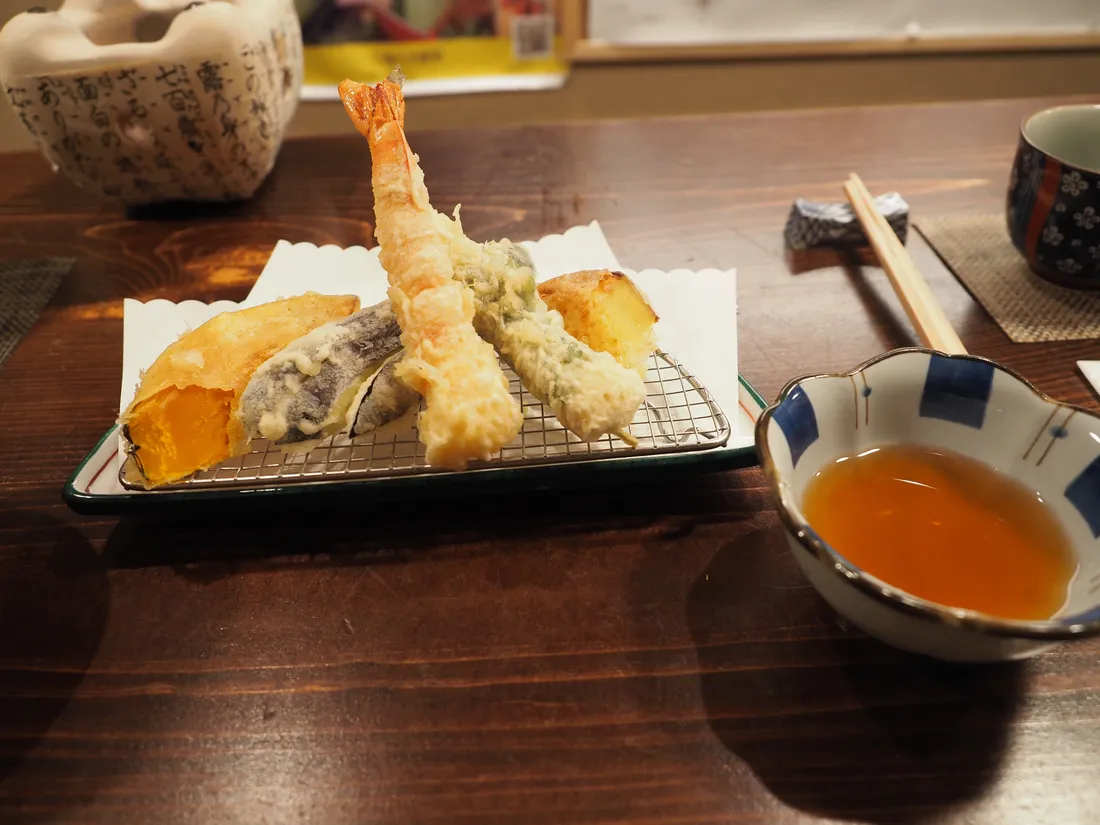 Tempura.
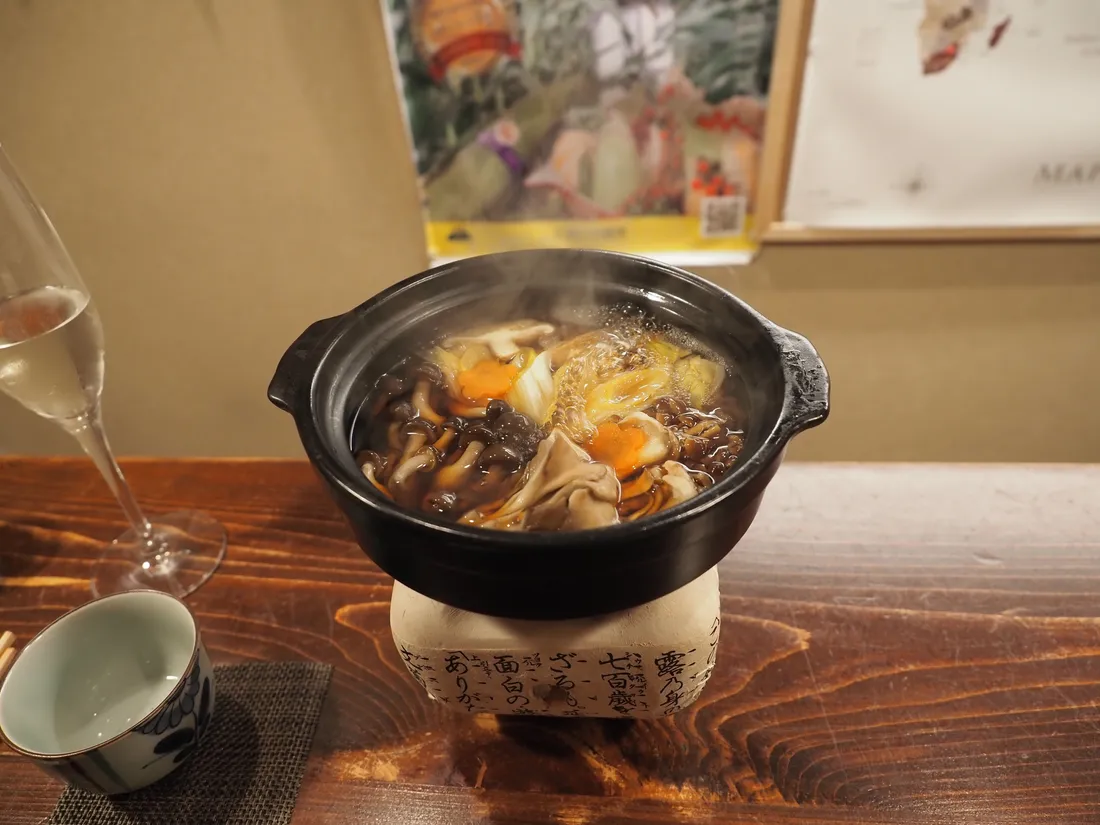 Sukiyaki.
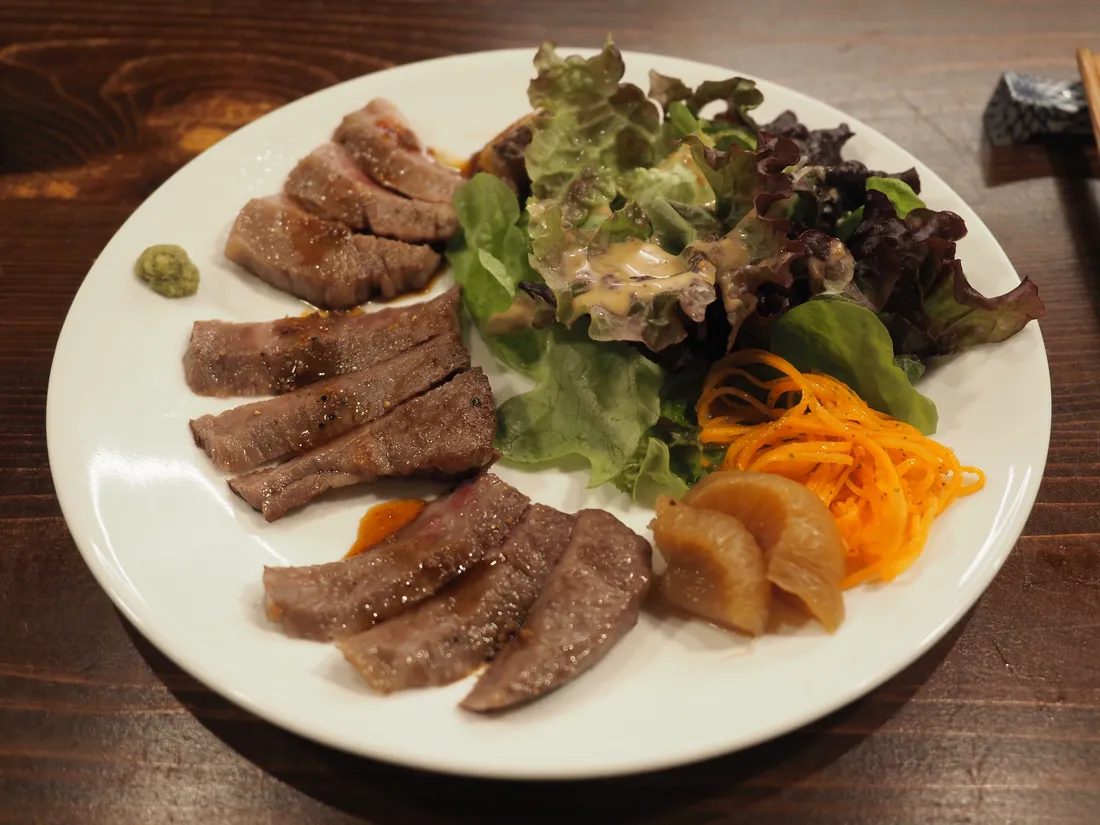 Steak-style wagyu.
 Lemon cake to finish.
This is the kind of meal we'd slot into your trip, matched to what your family actually likes to eat. A 30-minute call is all it takes to start.
Ready to start yours?
We plan trips like this for families headed to Japan, Thailand, and Vietnam. Book a free 30-minute call, tell us who's going and what they love, and we'll take it from there.
Splash of Color Travel, custom family itineraries for Japan, Thailand, and Vietnam.
Planning Japan for your group or family?
Tell us who's coming and roughly when. On a free 30-minute call we talk through the route, the pace, and where to stay, and your first itinerary draft arrives within 5 business days. Founding clients: no planning fee for our first 10 clients, in exchange for honest feedback after your trip. Our guarantee: if the first itinerary draft doesn't fit your family, two rounds of revisions are included to get it right. If it still isn't right, you can walk away at no cost.
Book a free planning callNot ready for a call? Get the free guide.
Get our free northern Thailand luxury guide: our favorite stays up north, the call-outs worth booking, and how we'd pace a comfortable trip. Plus our newsletter every couple weeks: the stays and activities we'd book for you.
More on Japan
- Traveling in Japan With Kids: What Makes the Trip EasierPlanning Decision