Should the super El Niño change how you plan Thailand, Vietnam, or Japan?
NOAA says a very strong El Niño is coming this winter. What it does to Thailand, Vietnam, and Japan, month by month, and what I would actually change.
By JeremyJeremy and Jason run Splash of Color Travel together.
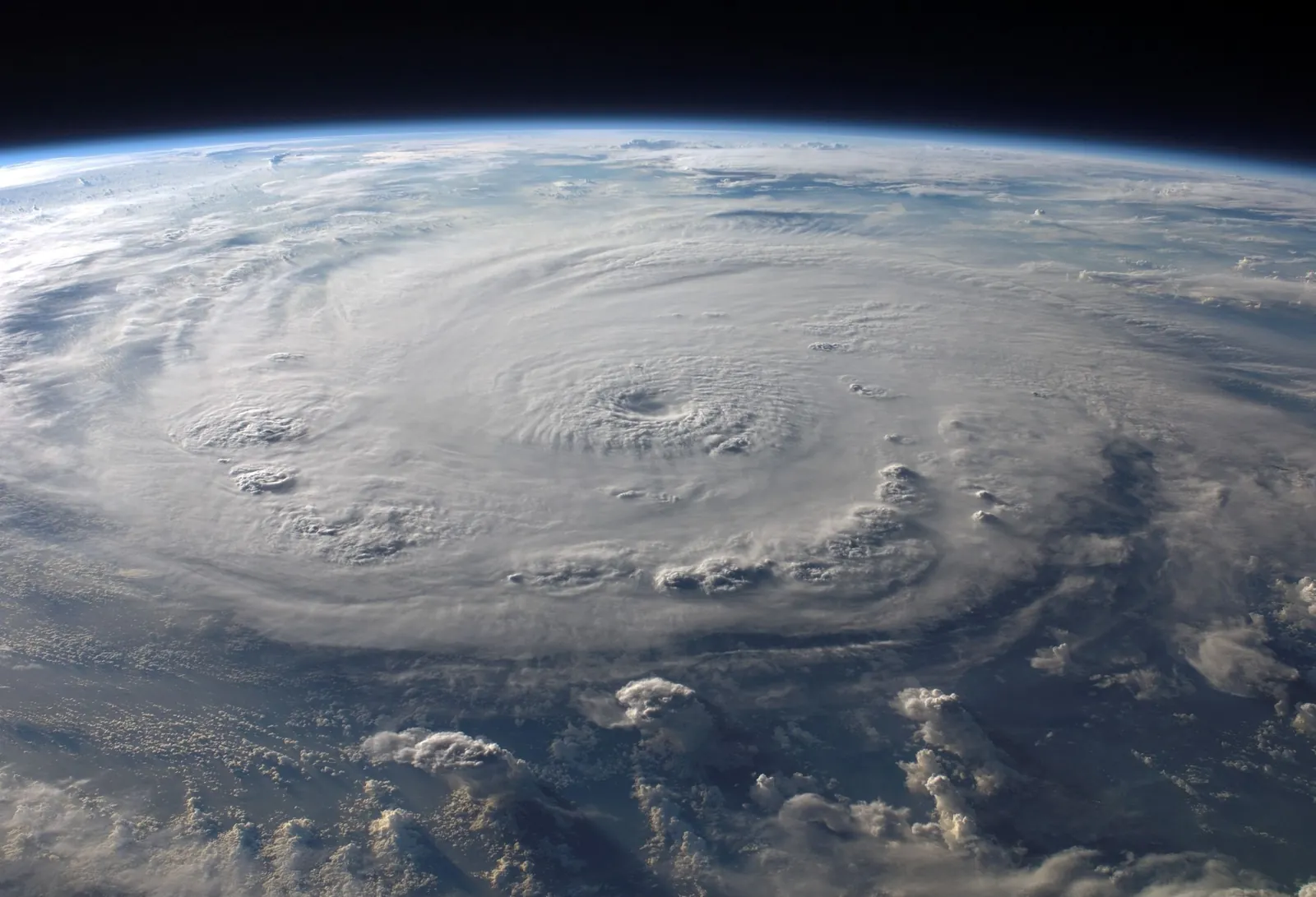
The short version: it shouldn't change whether you go. It should change when you go where. Some months in some places get noticeably worse (Chiang Mai in March, Bangkok in April, the Mekong in the dry season), and a couple actually get better (central Vietnam's beaches in the fall, Hokkaido all winter). Plus how you fly there from the US, and some insurance fine print most people skip.
NOAA put out an El Niño advisory this week. The odds of a very strong one this winter are now above 90%, and there's a decent chance it ends up the biggest on record. That got a lot of headlines, and most of the scary ones are about places on the other side of the Pacific. I spent a while reading what a strong El Niño has historically done to our three countries, and it's less dramatic than the headlines and more specific than "it'll be hot."
If you already have dates and a group, book a free call and we'll talk through your timing.
What's actually happening out there
The version I can explain without a whiteboard: the trade winds along the equator weaken, a giant pool of warm water that normally sits near Indonesia slides east toward South America, and everyone's weather shifts a little. The jet stream over North America moves south for the winter. Mainland Southeast Asia dries out and heats up. Typhoons start further out in the Pacific.
The timing is the useful part. The event builds through the fall, peaks from December through February, and the ocean starts cooling off in spring. The weather does not get the memo right away. The heat lags the ocean by three to six months, so the worst of it lands in spring 2027, not this winter.
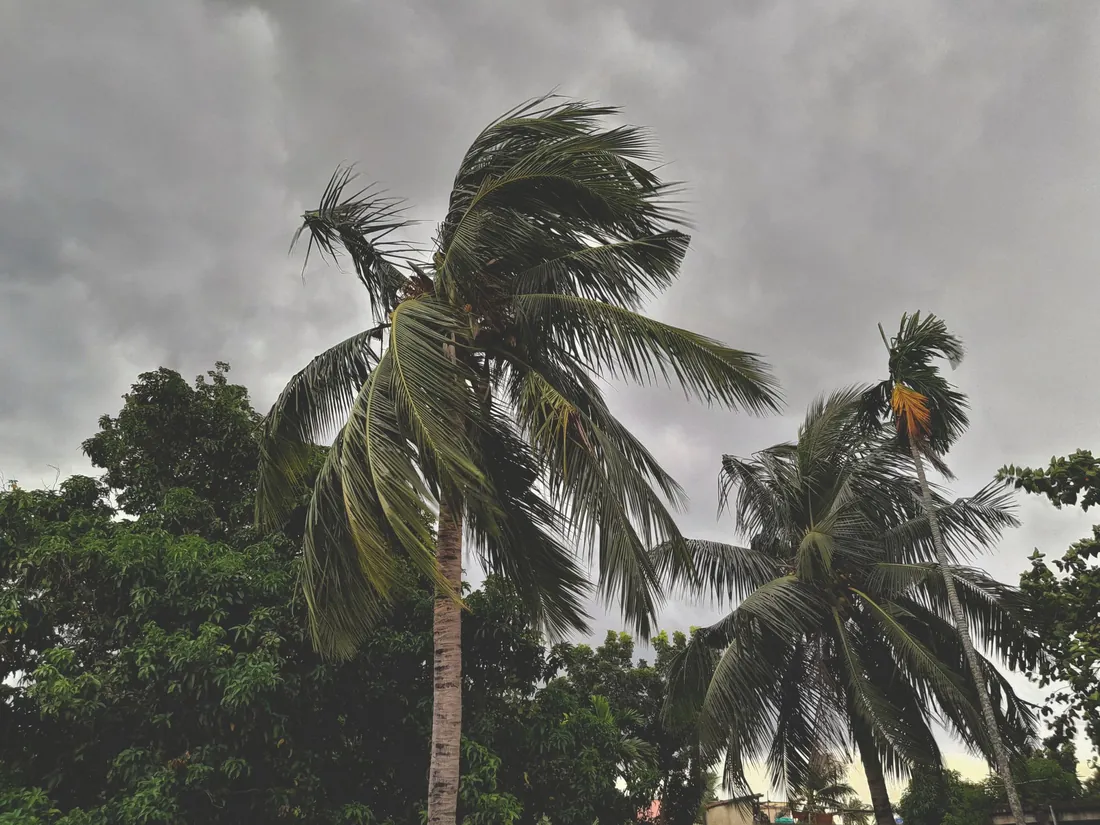 A monsoon sky doing what it's supposed to. The problem next year is the months where it doesn't show up.
Getting there is the part I'd worry about first
This has nothing to do with Asia and it's the piece most people miss. During a strong El Niño the southern jet stream drags storms across the southern US from about December through March. Dallas, Houston, Atlanta, and Miami all sit under it, and those are the hubs a lot of Asia routings connect through.
Thunderstorms and winter storms already cause roughly 70% of air traffic delays in the US in a normal year. This winter the storm track parks itself on the southern hubs specifically.
What I'd do, in order of how much it costs you:
- Route through Denver, Salt Lake, Chicago, or Dulles instead. Snow hubs have de-icing down to a science. Thunderstorm hubs just close the ramp and wait.
- Take the early departure. Before 8am, ideally. Afternoon heating builds the storm lines, and the 6am flight usually clears before the mess starts.
- Give yourself a real connection. Two and a half to three hours for anything routing through California, the Gulf Coast, or Florida. A 55 minute connection in Dallas in January is a coin flip.
We build the routing into the itinerary when we plan a trip, so this is the kind of thing that just gets handled. If you're booking flights yourself, this is the paragraph to screenshot.
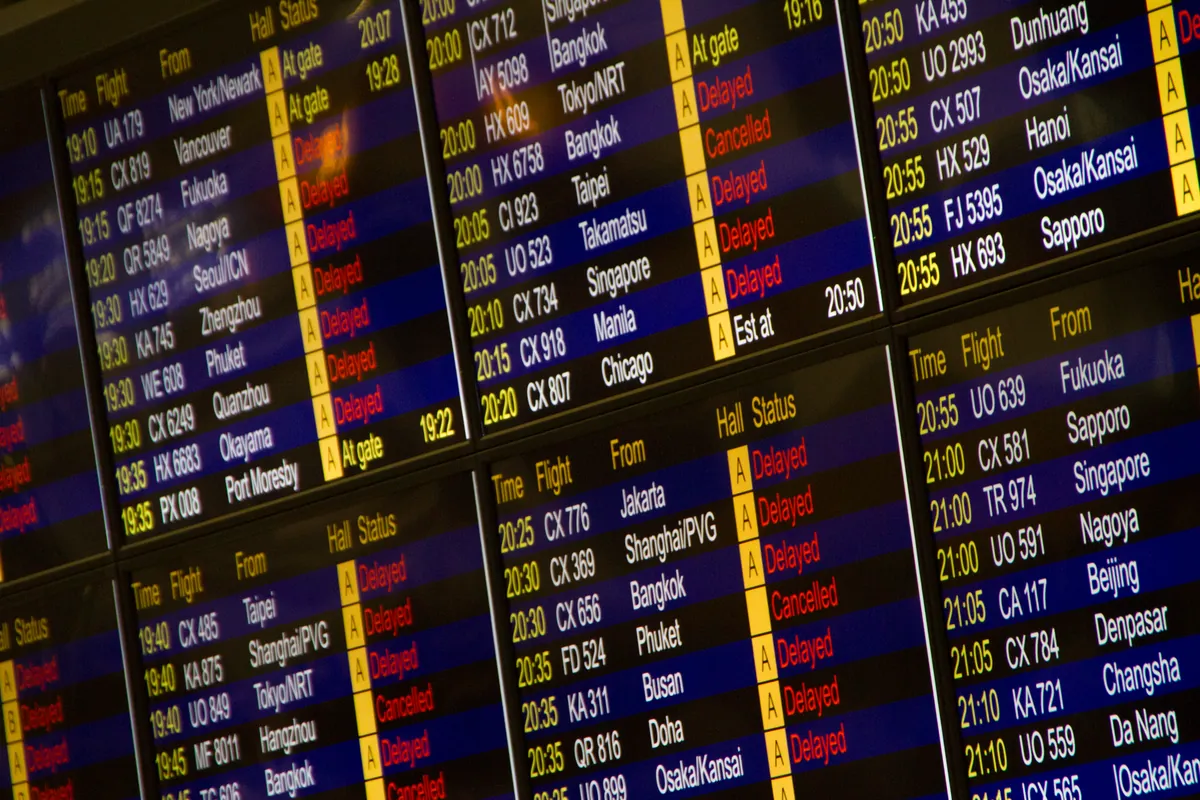 The board nobody wants to read. Dallas, January, about 4pm.
Japan: go north for snow, and watch the typhoon calendar
Japan gets two real effects and one that's more of a footnote.
Ski season is the big one. El Niño winters run warm in Japan, one to two degrees above normal, because the pressure setup that pushes Siberian air across the Sea of Japan weakens. That's the "sea-effect" snow machine that makes Japanese powder famous, and it runs slower. The problem is worst in the lower and mid-elevation Honshu resorts (the lower slopes at Hakuba, Myoko, Yuzawa). Historically, strong El Niño winters there have meant 30 to 50% less snow, with rain and slush on the lower runs.
Hokkaido is the hedge. Niseko, Furano, and the interior resorts stay cold enough that whatever falls, falls frozen. The historical odds of above-average snow in interior Hokkaido during an El Niño year are around 80%. If a ski trip is the point of the trip, I'd bias it to Hokkaido this year. If it has to be Honshu (closer to Tokyo, easier with a mixed group), pick a resort with top lifts above 1,500 meters and stay above the rain line.
Typhoons are the other one, and it's a strange trade. El Niño years see fewer typhoons hit Japan, two or three instead of four or five. But the ones that do hit started further out in the warm Pacific, had longer to build, and arrive stronger. So August through October is fewer disruptions, bigger disruptions. A Shinkansen halt from a big typhoon is a full-day problem, not an hour. We leave a buffer day around the long train legs in that window.
The footnote: July and August in Tokyo, Kyoto, and Osaka have been getting hotter regardless of El Niño, and this year's setup doesn't help. Summer sightseeing is a mornings-and-evenings affair now. That was already our advice.
Thailand: the north has a bad spring, the islands have a bad late summer
Thailand takes the most direct hit of the three, but it's very seasonal, so it mostly comes down to putting the right region in the right month.
Northern burning season, February through April. Every year farmers burn fields across the north and the smoke settles into the valleys around Chiang Mai, Chiang Rai, and Pai. In a normal year it's bad. After an El Niño winter the ground is drier, there's more to burn, and the air quality readings go past "unhealthy" into "hazardous." Flights get visibility holds. Trekking and anything outdoors is off. I would not send anyone to the north between mid-February and mid-April next year, full stop. November through January is still the north at its best.
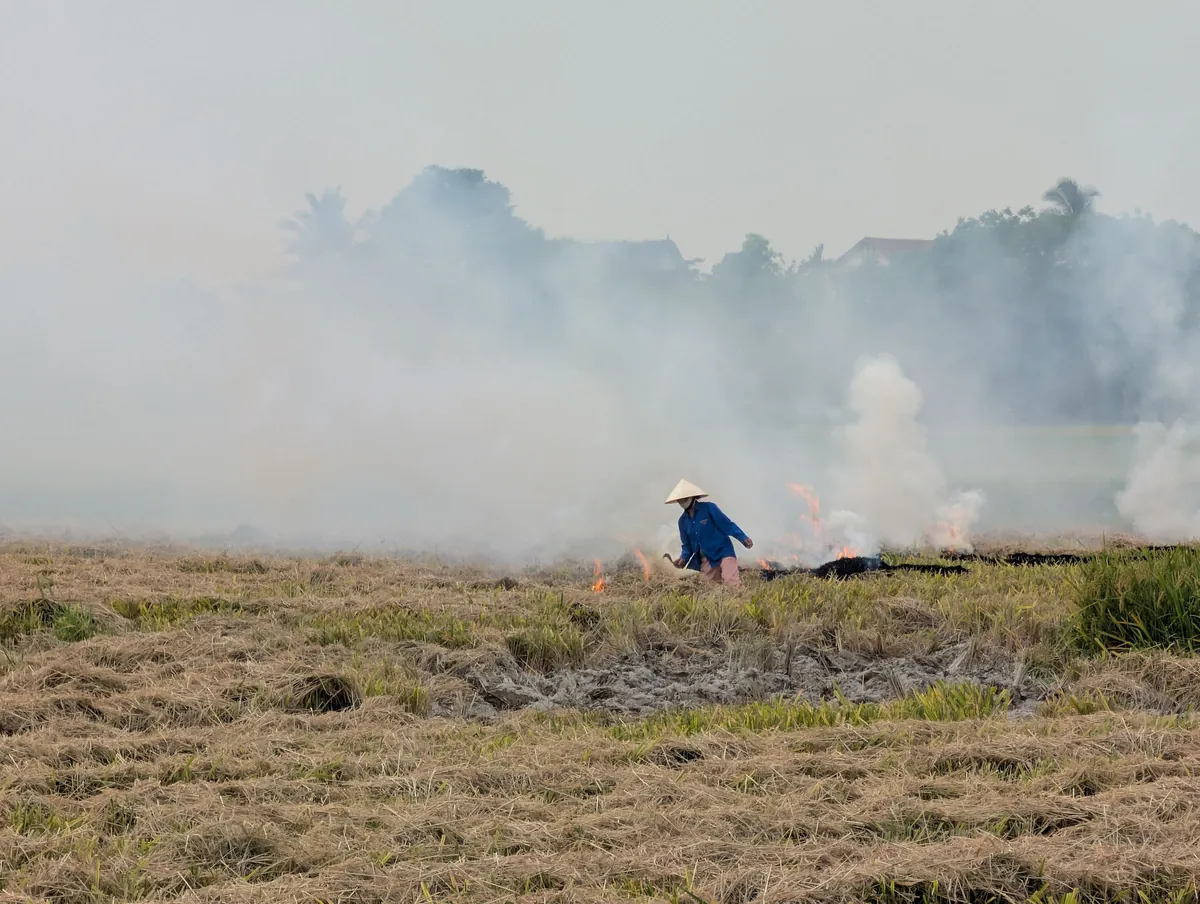 Crop burning after the harvest. Multiply this by every valley in the north and you get March in Chiang Mai.
Hot season, March through May. Bangkok already ranks among the highest-risk cities in the world for extreme heat, and this is the spring where the lagged El Niño heat lands. Expect days over 40°C with a heat index past 50. That doesn't cancel Bangkok, it reschedules it: temples and markets between 6:30 and 9:30 in the morning or after sunset, and a hotel with sealed air conditioning rather than the charming open-air lobby. Pool at 2pm. This is where a hotel we'd actually stay in again earns its price.
Southern haze, August through October. Phuket, Krabi, and Samui don't get the northern smoke. What they get in a strong El Niño late summer is smoke from peat fires in Sumatra and Borneo blowing across the Malacca Strait. Peat burns underground for weeks. If an islands stretch lands in that window, we check the ASEAN Specialised Meteorological Centre haze map (a real government site, updates daily) and we're ready to swap the order of the trip. Anyone with asthma packs an N95 or P100. Surgical masks don't filter smoke particles.
Diving, May through October. The Andaman side (Similan, Surin) and the Gulf side (Koh Tao) both run hot enough in an El Niño year to bleach coral, and Thailand closes marine parks when it happens. Before locking in a dive-heavy stretch we check NOAA Coral Reef Watch's 60-day outlook for the site. If the heat stress number is climbing, we move the dive days earlier or pick deeper walls and current channels where the water mixes and stays cooler.
Vietnam: the Mekong runs low, the central coast gets a break
Vietnam is the mixed one. One genuinely bad window, one genuinely good one.
Mekong Delta, December through May. Less rain upstream means the river drops to multi-year lows, and with less freshwater pushing back, the sea pushes in. Saltwater reaches 50 to 70 kilometers inland into Bến Tre, Tiền Giang, and Cần Thơ. Two things follow: the river cruises between Saigon and Siem Reap hit draft restrictions and swap scenic boat segments for a coach, and hotels in the delta have freshwater problems. If a Mekong cruise is on the wish list, read the operator's low-water clause before you pay. Some guarantee a decent alternative routing, some just put you on a bus. We ask before we book it.
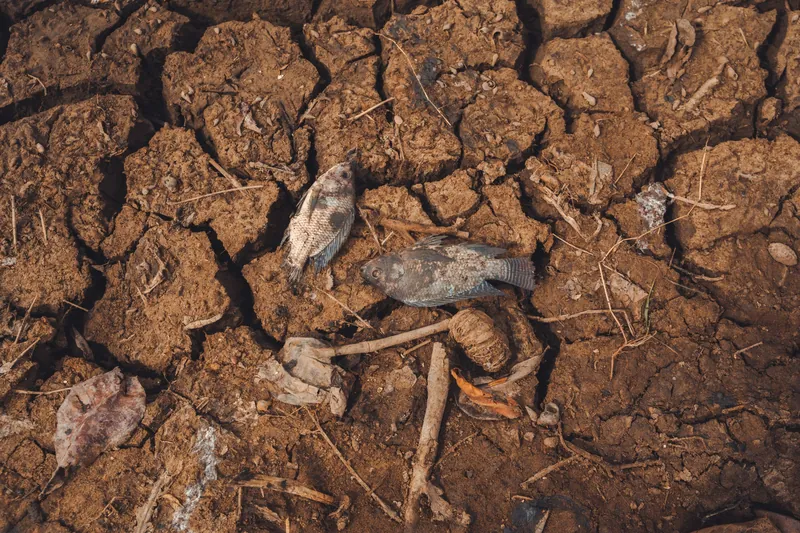 Dry season in a drought year. The delta doesn't get this bad everywhere, but the hotels notice.
Saigon heat, spring. Same story as Bangkok, arguably worse. Saigon sits near the top of the global list for urban heat vulnerability. Same fix: early mornings, sealed AC, afternoons somewhere with a pool.
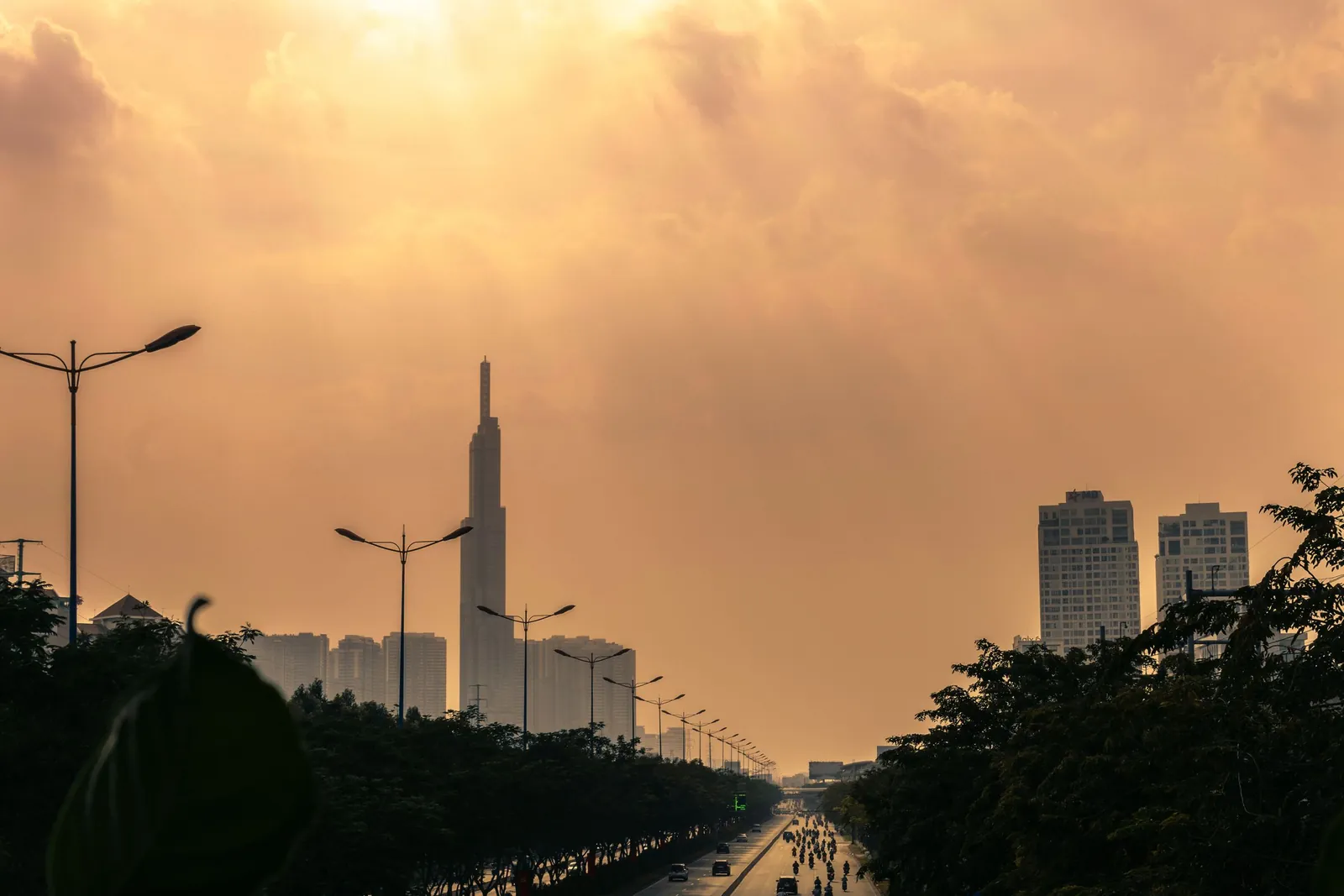 Saigon at golden hour. Pretty from a rooftop, brutal at street level in April.
Hanoi and Ha Long, early summer. Winter stays cool and pleasant in the north. The problem shows up in early summer with heatwaves and low reservoirs, which in a dry year has meant rolling power cuts. We check that the hotel has its own generator. Not glamorous, but the difference between a hot night and a hot night with no AC.
Central coast, September through November. This is the good news. El Niño suppresses typhoons in the South China Sea, so the season starts later, ends earlier, and fewer storms make landfall on the Đà Nẵng, Hội An, Quy Nhơn, Nha Trang stretch. Fall is normally the risky time to book central Vietnam. This year it's the safer bet it has been in a while. If a group wanted Hội An in October and was nervous about it, this is the year.
The insurance fine print nobody reads
This one is destination-agnostic and it's the thing I'd push hardest on. Standard trip insurance is written for a hurricane hitting your hotel. El Niño problems look different: a rolling four-hour delay that turns into a missed connection, smoke that makes the islands miserable but doesn't close them, a river cruise that quietly becomes a bus tour. Basic policies don't pay for any of that.
- Cancel For Any Reason. The name is the feature. Most insurers only sell it within 14 to 21 days of your first deposit, so this is a decision you make early, not the week before. You can cancel up to 48 hours out and get 50 to 75% back.
- Check the delay trigger. Some policies need the airline shut down for 48 straight hours before they pay. Look for 12 to 24 hours.
- Check what counts as weather. You want unnamed storms, flooding, and smoke covered, not just named typhoons.
We flag the CFAR deadline in the planning timeline so it doesn't slip. It's a small thing, but it's the kind of small thing that turns a bad week into a refund instead of a story.
So, what would I actually change
Not the destination. The order and the dates:
- Japan ski trips go to Hokkaido, or high Honshu, with a buffer day around long train legs from August to October.
- Northern Thailand happens November through January, not spring. Bangkok in March through May runs on a morning-and-evening schedule with a pool hotel.
- Islands in August through October come with a haze check and a plan B order.
- Mekong cruises get their low-water clause read first. Central Vietnam in the fall gets booked with more confidence, not less.
- Flights route around the southern US hubs, and Cancel For Any Reason gets bought in the first three weeks.
That's about a week of research if you do it yourself, and the forecasts move monthly. Or you tell us your dates and who's going and we build it in. Book a free call, or grab the free northern Thailand guide below if you're still in the looking-around phase.
Questions people are asking
Is it safe to go to Thailand during the 2026-27 El Niño? Yes. The two windows to plan around are northern Thailand from mid-February to mid-April (burning season smoke, worse in a drought year) and the March to May hot season in Bangkok. Both are scheduling problems, not cancel-the-trip problems. November through January in the north is unaffected and still the best time to go.
Does El Niño affect Vietnam? Two ways. The Mekong runs low from December through May, which disrupts river cruises and delta hotels, and the dry-season heat in Saigon is worse than usual. On the plus side, El Niño suppresses typhoons in the South China Sea, so central Vietnam's coast (Đà Nẵng, Hội An) has a lower storm risk in the September to November shoulder season.
Will there be snow in Japan this winter? In Hokkaido, very likely yes. Niseko and Furano stay cold enough to keep everything frozen, with roughly 80% odds of above-average snow in interior Hokkaido during El Niño years. Lower-elevation Honshu resorts around Nagano and Niigata are the risk, with historical deficits of 30 to 50% and rain on the lower slopes. Pick Hokkaido or a Honshu resort with lifts above 1,500 meters.
Planning a group or family trip?
Get our free northern Thailand luxury guide: our favorite stays up north, the call-outs worth booking, and how we'd pace a comfortable trip. Plus our newsletter every couple weeks: the stays and activities we'd book for you.
Ready to have it handled? Book a free 30-minute call.